GPT-6.2 Sol Release Watch: Rollout, Demos and Usage Limits
Is GPT-6.2 Sol out? Follow release-date reports, Codex routing questions, original Three.js demos and Plus/Pro feedback on usable limits.
 Himi LiProduct Manager at EvoLink
On this page
The works below are attributed to Sol 6.2 by their posters; the exact backend version behind each output remains unconfirmed.
What is GPT-6.2 Sol, and has OpenAI released it?
base_model:gpt-6.2-sol beside base_model:gpt-6.2-astra. That is the clearest naming clue in this round of reports.When will GPT-6.2 Sol be released? The timeline so far
OpenAI has confirmed no date. These are the main events behind the timing discussion:
| Date, UTC | Source | What it adds |
|---|---|---|
| November 4 | Stephanie Palazzolo | The reporter said new Sol, Astra and cyber models could arrive as soon as Friday; her post gave no 6.2 version number. |
| November 4 | Lyra | A cloud-filter image with both 6.2 names. |
| November 8 | Token Gremlin | Personal visual-coding and allowance feedback attributed to Sol 6.2. |
| November 8 | OpenAI Developers | A short teaser captioned “Tomorrow.” Its text does not name Sol or 6.2. |
The Friday in the November 4 report was November 6. That window has passed without a Sol 6.2 announcement in the current documents. New Monday or Thursday guesses remain predictions until an official update names the product and access details.
How can you tell whether Codex is routing you to GPT-6.2 Sol?
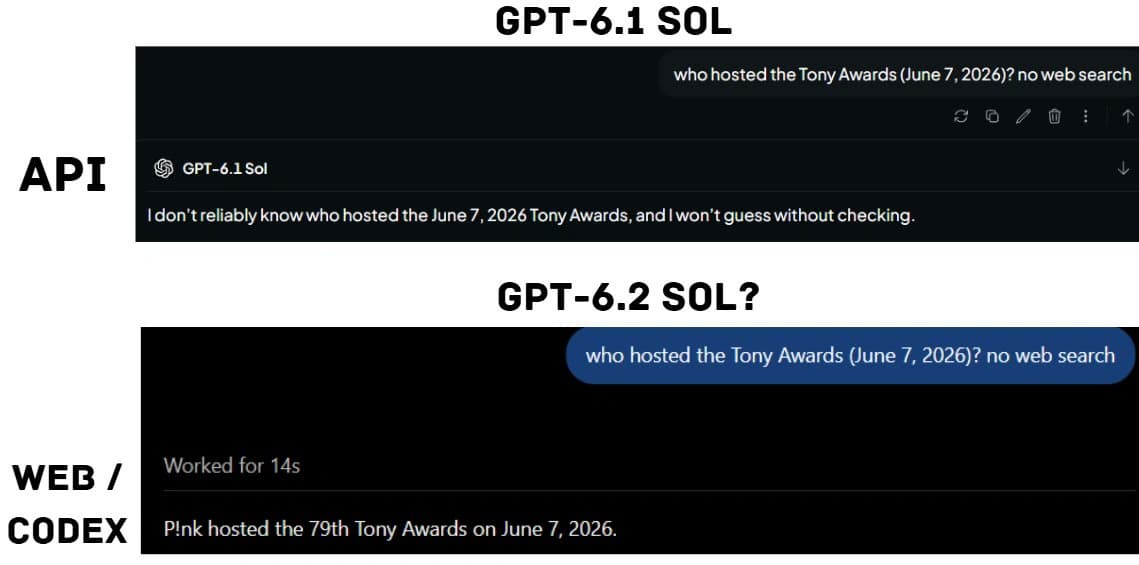
Keep the selected model and reasoning setting, any response or usage record naming the served model, and the exact prompt with its tools and context. Someone else's quota screenshot does not establish your account's access. You can compare today's output with a saved baseline while keeping the identity claim separate from the improvement you observe.
What do the GPT-6.2 Sol community demos show in Three.js?
A village with changing light
This could be a starting point for a portfolio or browser prototype. The next steps are testing navigation, phone performance and whether edits preserve the working scene.
A black hole organized around light and motion

A visual explainer could develop this into a guided tour with labels and camera controls. Scientific accuracy would need separate validation; the clip shows a visual treatment.
The Great Wave becomes a space to explore

The useful creative step is turning a flat reference into spatial layouts and camera paths that a designer can explore.
Floating islands bring several systems together
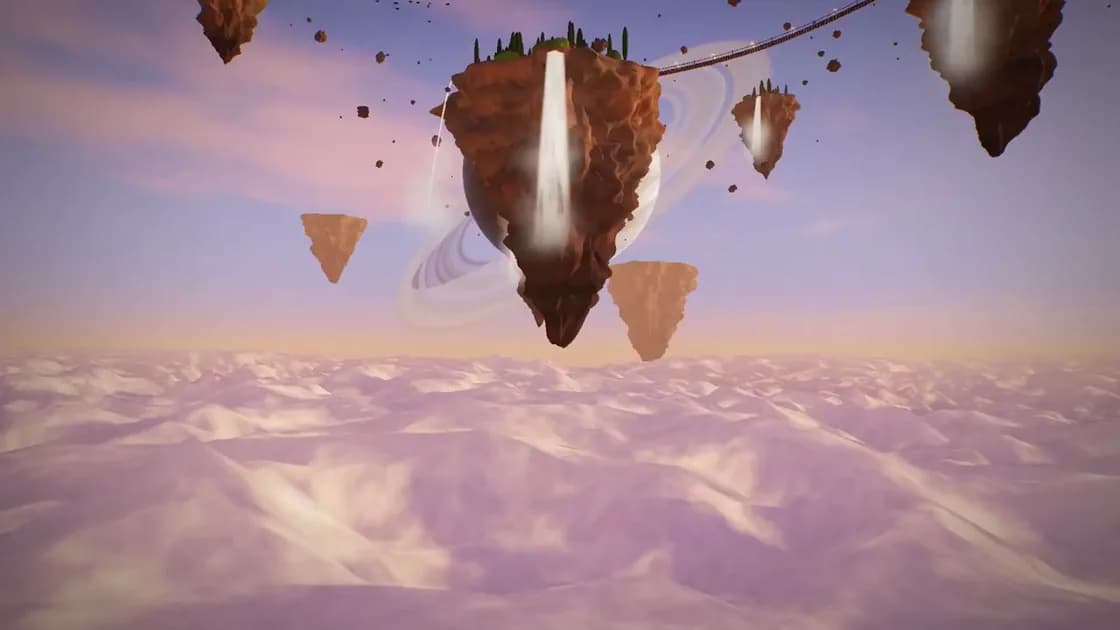
A meaningful follow-up would change the island layout or lighting while preserving the camera and other effects. That tests whether the result can become a maintainable project.
Will GPT-6.2 Sol give Plus and Pro users more usable limits?
What matters is how much finished work fits into a session: the first version, edits, debugging and tests. Fewer repair turns can be as valuable as a faster first answer. OpenAI has not published Sol 6.2 plan limits, so these reports give useful questions for a documented rollout.
GPT-6.2 Sol vs GPT-6.1 Sol: what would make the upgrade worthwhile?
Visual coding is the strongest theme in the examples. A useful comparison also covers the work after the screenshot:
| Task | Keep comparable | Look for |
|---|---|---|
| First scene | Brief, reference and reasoning setting | A coherent composition containing the requested elements. |
| Revision | The same layout or lighting change | A successful edit that preserves existing behavior. |
| Browser delivery | Desktop and mobile checks | Usable controls and stable animation. |
| Existing project | A bounded change and its tests | An accepted change with less repair time and allowance consumed. |
Is GPT-6.2 Sol better than Astra or Opus 5.5?
Should you wait for GPT-6.2 Sol or keep your current model?
Keep the model that completes today's work. Save a visually demanding page, an animation revision and a real repository change for a later trial; those will reveal more than another attractive first frame.
Where can you find GPT-6.2 Sol use cases and prompts?
Each entry links the source and available media. Shared footage is grouped by media family in the data, so the collection is a way to discover tasks rather than a count of independent model tests. Choose an entry with a public prompt, retain that input and compare the result on the task you actually need.
GPT-6.2 Sol FAQ
Is GPT-6.2 Sol available in ChatGPT or Codex?
Some users report suspected routing from GPT-6.1 Sol. As of November 9, public OpenAI documentation establishes neither a general Sol 6.2 rollout nor account eligibility.
Can a prompt or model-name command unlock Sol 6.2?
A knowledge question or manually entered name does not grant access. Look for documented availability and a served-model record rather than the model's self-description.
Will Plus users get Sol 6.2?
Community posts discuss Plus access and longer usage. OpenAI has not announced Sol 6.2 plan eligibility or limits at this update.
Is Sol 6.2 the same as Astra 6.2?
The cloud image contains two different strings. OpenAI has not documented their specifications or relationship; follow the earlier Astra sightings separately.
Does Sol generate native video in these demos?
The posters describe code rendered in a browser, including Three.js. Recorded clips of those scenes do not establish a native video-generation feature.
Where should I check pricing and API access?
Use OpenAI documentation and verified provider model pages when they publish the new version. Existing Sol rates and context limits belong to their named versions.