
GPT-6.1 Terra: What It Is, Release News, and What to Expect

What is GPT-6.1 Terra, and why is it getting attention?
gpt-6.1-terra in Microsoft's EF Core repository. Reporting about a new Terra and the history of the older Terra tier give people reasons to watch it, although its final product position remains unannounced.The community wants a middle option: more capable and reliable than Luna, cheaper and faster than Sol. OpenAI has not yet published performance results confirming that GPT-6.1 Terra can deliver that combination.
For developers who already use Luna for routine work and Sol for harder tasks, another model adds a choice to manage. It would need to improve completion quality, turnaround time, or cost to earn a place in that workflow.
GPT-6.1 Terra release date: the timeline so far
| Date | Public development | What the date means |
|---|---|---|
| October 16, 2026 | Microsoft merged an EF Core evaluation update containing a Terra reference. | The change became part of a public engineering repository. |
| October 19, 2026 | Investing.com, citing The Information, reported a possible new Terra in the coming weeks. | A potential launch window was reported, without a fixed day. |
| October 22, 2026 | OpenAI's public model documentation and changelog still do not announce its release. | There is no confirmed public launch date to plan around. |
October 16 marks a code merge, and October 19 marks a news report. Neither is the model’s release date. The “coming weeks” estimate still needs an official announcement before developers can plan around it.
What Microsoft's evaluation code actually shows
gpt-6.1-terra as the default judge. These defaults can be overridden when the evaluation runs.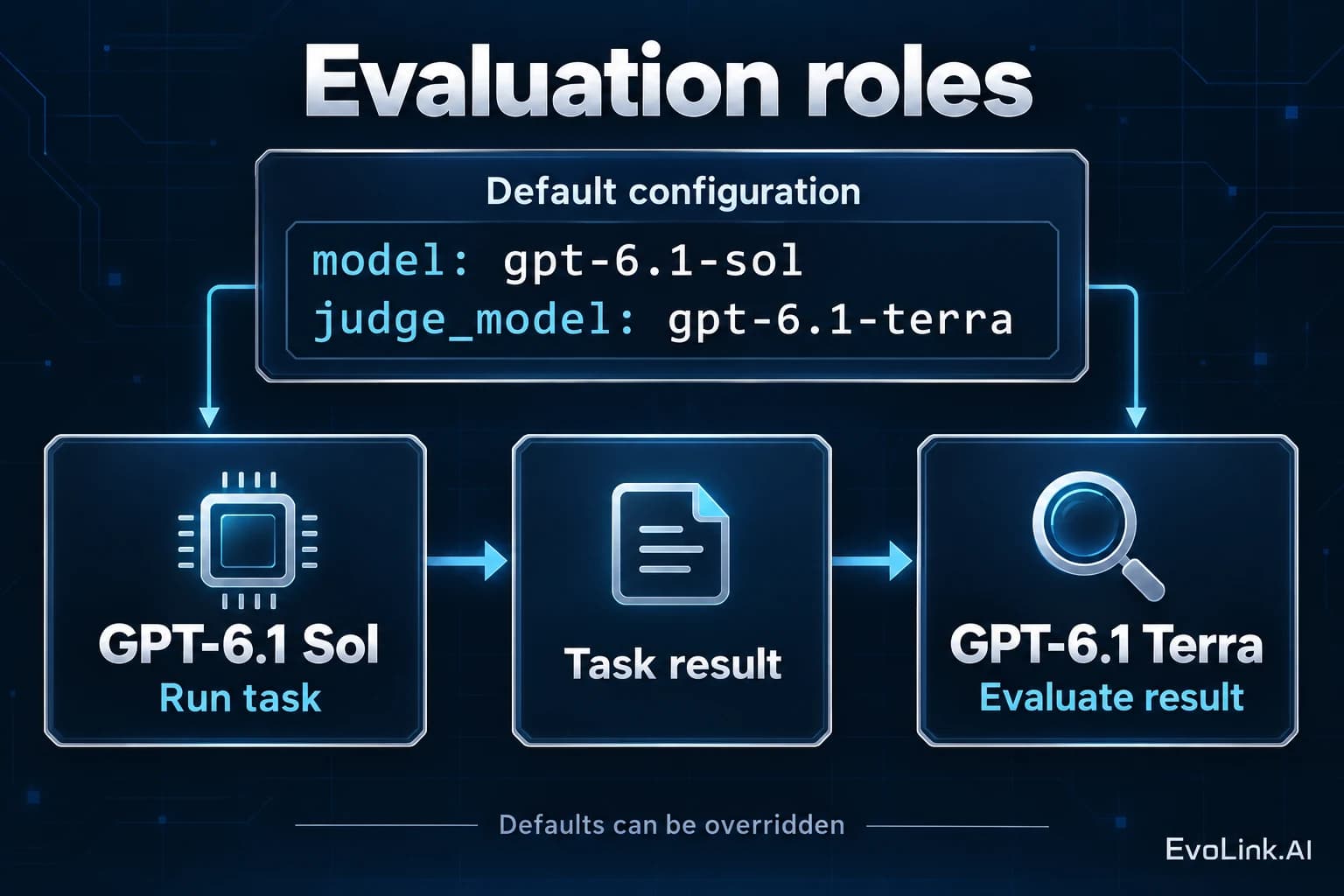
In an evaluation workflow, an executor performs a task and a judge assesses its result. Separating the two roles lets a team use different models for producing an answer and reviewing it. A judge assignment describes a role in that workflow; it does not establish the model's overall purpose.
The configuration confirms a public reference to the model name. It does not include a successful Terra request, a public-access schedule, or an explanation of why Microsoft chose these defaults. It also provides no test results establishing deterministic grading.
What the launch reporting adds
The October 19 report describes a potential new Terra with improved capabilities, a price below GPT-6.1 Sol, and a possible release in the coming weeks.
The report does not establish that Terra will outperform Sol or provide an official rate. A less expensive model that can handle some of the tasks developers currently send to Sol could still be useful. Which tasks it can handle, and how much time or money it saves, will require official product details and tests under comparable conditions.
Which Terra are people comparing with Sol?
Existing Terra user reports largely concern GPT-5.6 Terra. They do not measure GPT-6.1 Terra. The names refer to different models:
| Name | Model or comparison |
|---|---|
| GPT-6.1 Terra | The model name in the public reference and current launch reporting. |
| GPT-5.6 Terra | The older model behind existing user experiences and many Terra-versus-Sol comparisons. |
| GPT-6.1 Sol | The released model discussed in current speed and complex-task conversations. |
| GPT-6 Luna | The existing Luna model used as the lower-cost comparison point here. |
A comparison labeled only “Sol vs Terra” may therefore describe GPT-6.1 Sol against GPT-5.6 Terra. Those results can help developers compare the existing models, but they do not measure GPT-6.1 Terra. Likewise, the Luna comparison here does not imply an announced GPT-6.1 Luna.
Why developers want a faster alternative to Sol
The time from a request to a usable result includes tool calls, context processing, retries, and review as well as text generation. A quick answer that needs repeated corrections can take longer overall than a slower first attempt. Developers want a new Terra to shorten the complete task, though its ability to do so remains unconfirmed.
Why not just use Luna?
When several changes depend on each other, an early mistake can mean repeated edits, rerun tests, and additional review. A low price per call may not offset that rework. The hope for Terra is that it could handle these tasks more reliably without requiring frequent escalation to Sol.
What users valued in earlier Terra models
Suppose a validator rejects a value it should accept. A useful result could be a focused change and an appropriate regression test. Rebuilding the validation framework would expand the review burden without necessarily improving the requested outcome.
Or consider implementing one step from an already agreed plan. The task needs careful execution and attention to existing constraints; reopening every architectural decision may simply delay delivery.
Why a lower token price is only part of the cost
A successful result has costs beyond the first response. A failed attempt may consume additional model calls, test runs, and developer attention before the work becomes usable.
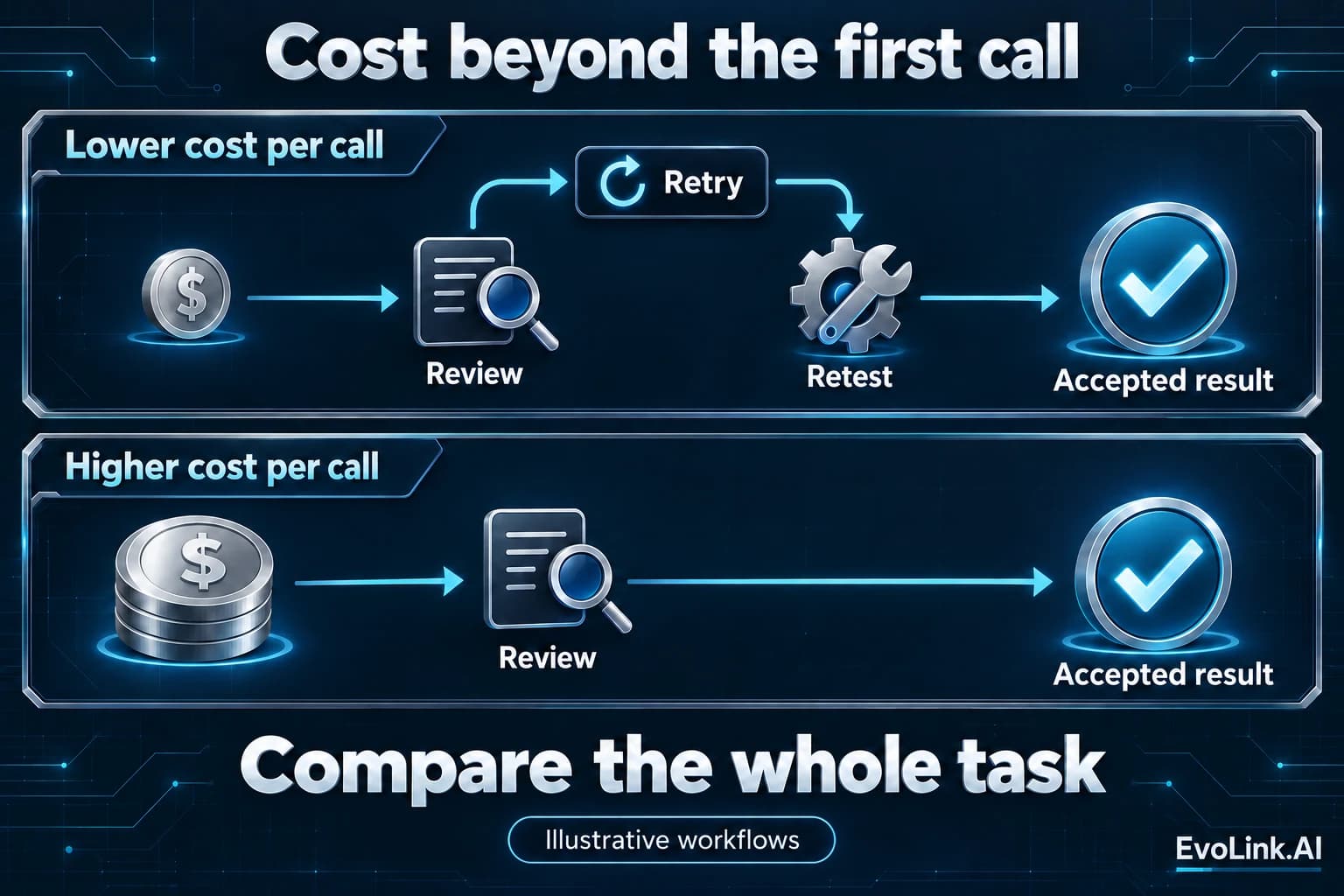
A cheaper response can still make the completed task more expensive if it needs repeated correction. Conversely, a model that uses more resources on its first attempt may cost less overall when it avoids rework.
For teams using models in production, the comparison is how much money and time it takes to finish a task to the required standard. A Terra price below Sol would be welcome, but its value also depends on which tasks it completes and how many attempts it needs. The tradeoff will become clearer once comparable results are available.
Does another model tier have a clear reason to exist?
If Luna already handles routine work and Sol handles difficult tasks, another option can add selection and maintenance overhead without improving outcomes. An unused position in a naming scheme is not a reason to adopt it.
Terra could earn a place if it handles tasks that repeatedly need correction on Luna while meaningfully reducing the waiting or expense of using Sol. That is the improvement developers are hoping for; actual performance remains unconfirmed.
An error in a short change may be easy to locate and fix. In a longer task, the same error could affect several later steps and cost much more to correct. Whether another model belongs in a team’s workflow depends on how well it addresses those recurring problems.
What to watch next, and where to follow access
The next announcements to watch are:
- A formal announcement and release date: a confirmed event would replace the reported window.
- A clear product position and comparable results: these would show whether Terra offers the practical difference people want.
- Availability in the channel you use: an OpenAI announcement, a selectable option in a client, and access through EvoLink are separate milestones.
Frequently asked questions
When will GPT-6.1 Terra be released?
OpenAI has not announced a public release date as of October 22, 2026. The October 19 reporting mentioned the coming weeks; that remains a reported window, not a fixed schedule.
Does Microsoft's code confirm an official launch?
It confirms a public reference to the name in an evaluation configuration. It does not establish a launch event, successful execution, or public access.
Can I select GPT-6.1 Terra in Codex now?
The evaluation reference does not confirm a selectable GPT-6.1 Terra option in Codex. A model label inside an evaluation configuration is different from a selectable product. EvoLink's own availability is tracked separately on the model page.
Will GPT-6.1 Terra be faster or better than Sol?
Its relative speed and quality remain unconfirmed. The community wants a faster, less expensive option, and older Terra models have positive user reports. Neither substitutes for results from the new model.
Does the Luna comparison mean GPT-6.1 Luna exists?
No. The comparison is with the existing Luna model and GPT-6.1 Sol. No GPT-6.1 Luna has been announced.
Has GPT-6.1 Terra pricing been announced?
OpenAI has not announced official pricing as of October 22, 2026. Reports expect it to cost less than Sol but do not provide a confirmed rate. See the model page for current pricing updates.