What Is GPT-6.2 Astra? Release News, Demos and Developer Expectations
Track GPT-6.2 Astra release news through OpenAI’s film, original coding demos and usage screenshots, with developer feedback on quality and usable limits.
 Himi LiProduct Manager at EvoLink
On this page
A pelican cycling through a vertical loop, an RPG with skills and inventory screens, and a split-screen animation comparison give this round of Astra news something tangible to watch. OpenAI’s new promotional film and conversations about usage limits add two practical questions: what could another Astra help people create, and how long could they keep working with it?
What is GPT-6.2 Astra, and what are Codex users seeing?
gpt-6.2-astra. Mashiro then shared three users’ usage screenshots, bringing the name to a wider audience.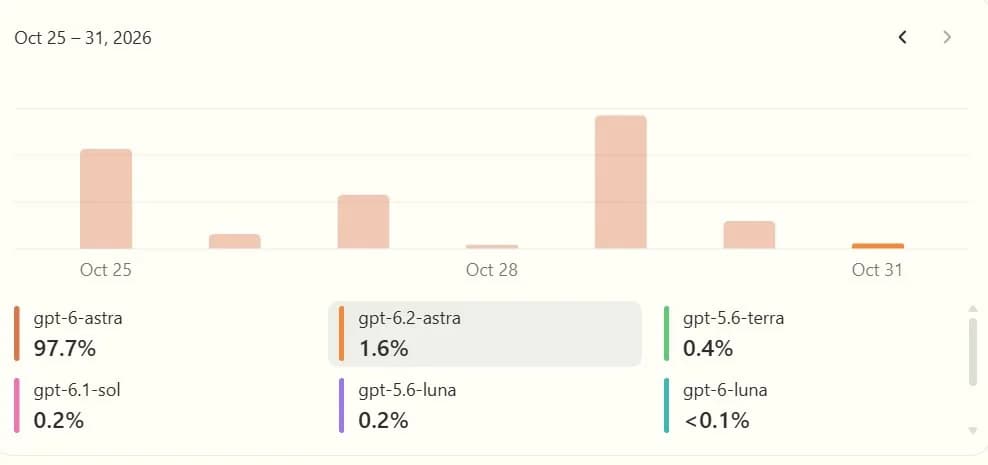
The usage-page change prompted existing users to look again at Astra’s output. The demos that followed concentrate on visual code: an animation with camera work, a detailed vector illustration, or a game scene that communicates a mechanic. These are creative tasks that coding agents are beginning to take on.
When is GPT-6.2 Astra coming out? Release news and timeline
| Date (Beijing time) | Development | Focus of discussion |
|---|---|---|
| October 31, 2026 | OpenAI posts its film; user usage screenshots also show activity dated October 31. | The film’s visual clue and the usage label. |
| November 1, 2026 | Users share the 6.2 label, followed by the pelican animation and RPG prototype. | Visual and interactive work attributed to another Astra. |
| November 2, 2026 | TestingCatalog collects the sightings; Leo shares a code-animation comparison. | Release expectations, visual detail and storytelling. |
| November 3, 2026 | A formal release date remains pending from OpenAI. | An announcement, access channels and usage terms. |
What happened to GPT-6.1 Astra, and how does 6.2 fit in?
OpenAI also said it planned future Astra models. The current 6.2 sightings have reopened that upgrade conversation, although the company has yet to link this name to the shelved version. For developers, a useful follow-up would combine persistence on hard tasks with accurate reporting of changes and respect for the project’s instructions.
What clues in OpenAI’s film sparked new-model speculation?
The film also offers a useful creative reference. Characters, shots, transitions and a theme come together as a complete story. Community code animations appearing at the same time invite a broader question about how far language models could take that creative workflow.
Astra coding demos: what do the 3D animation and SVG examples show?
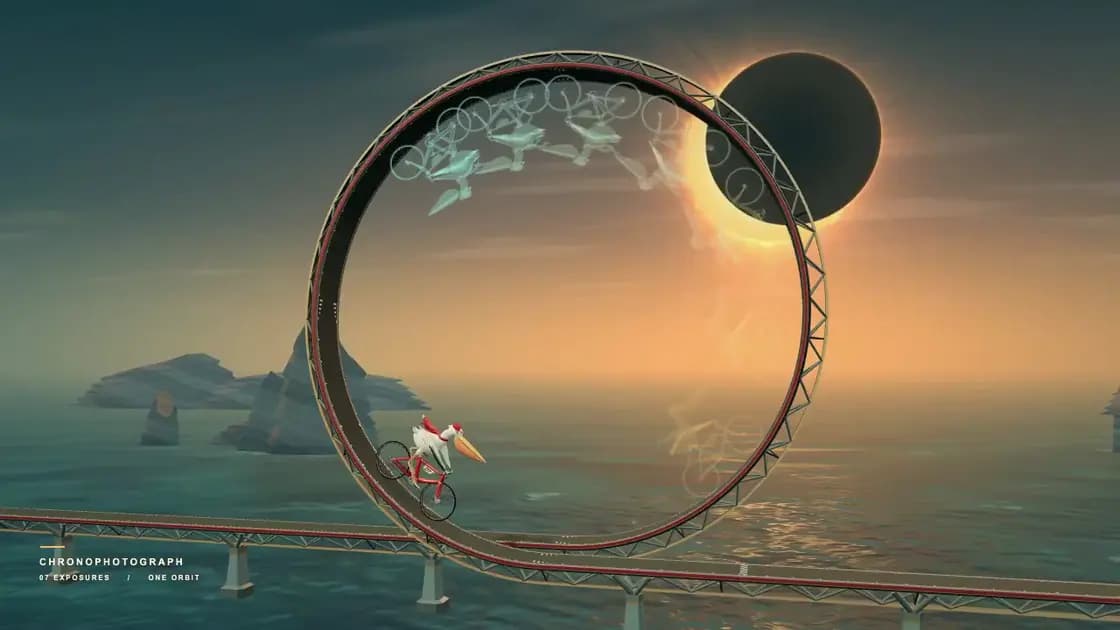
Its appeal comes from several parts working together: the rider’s pose, the bicycle’s movement along the track, and the shift between close and wide shots. For frontend creators, work like this takes code beyond interface functions into visual expression with a setting and rhythm.
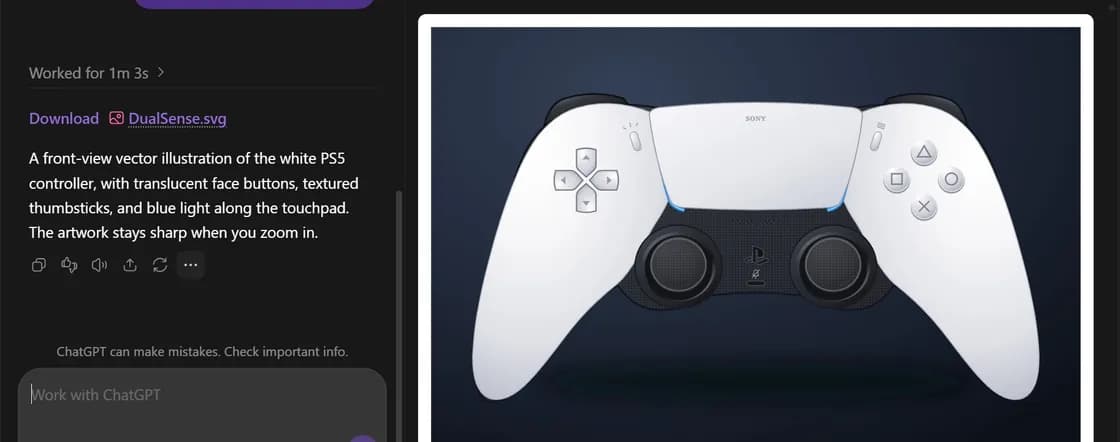
The attraction of SVG is editability. Changing colors, adjusting proportions and fitting different page sizes can become part of a frontend workflow. Similar work could serve as product illustration, an interactive explanation or a visual element on a landing page.
Astra’s 3D RPG demo: what does the game prototype include?
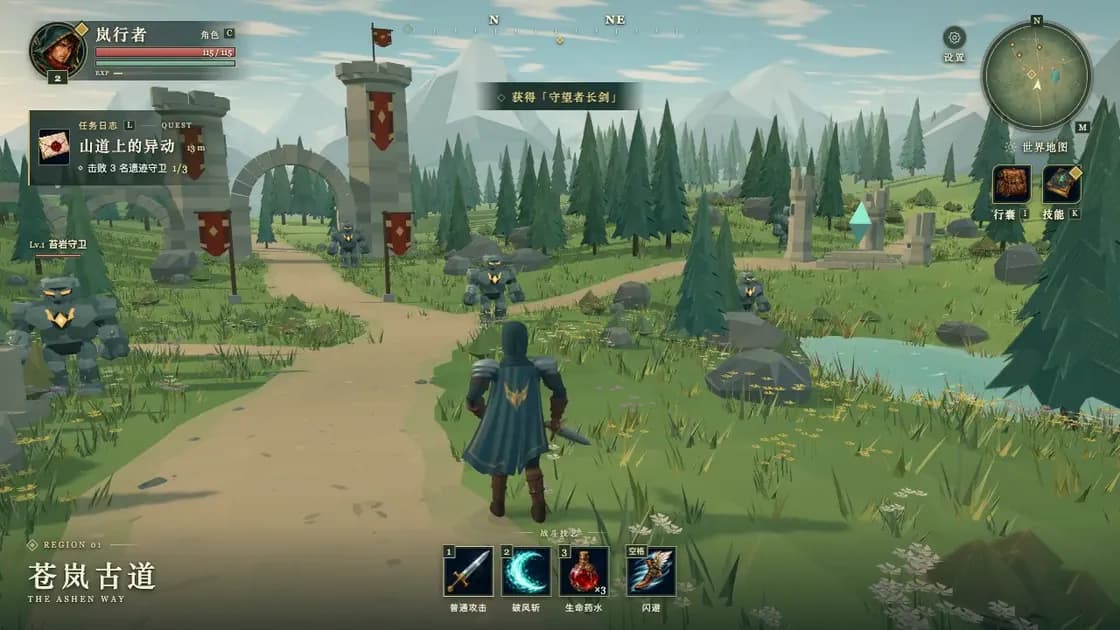
A prototype like this can make a gameplay discussion concrete. Designers can see movement and perspective earlier; developers can use a scene to communicate a quest, combat or exploration mechanic, then iterate around play feedback.
Inventory, collision and combat take the next stage into deeper engineering work: how state persists when an item is added, how the player moves after a map change, and how the interface stays in sync when a skill changes. For a coding model, managing these connected revisions is a key step from an attractive first draft to useful work.
Astra and Fable 5.5 animation: what does the community comparison show?
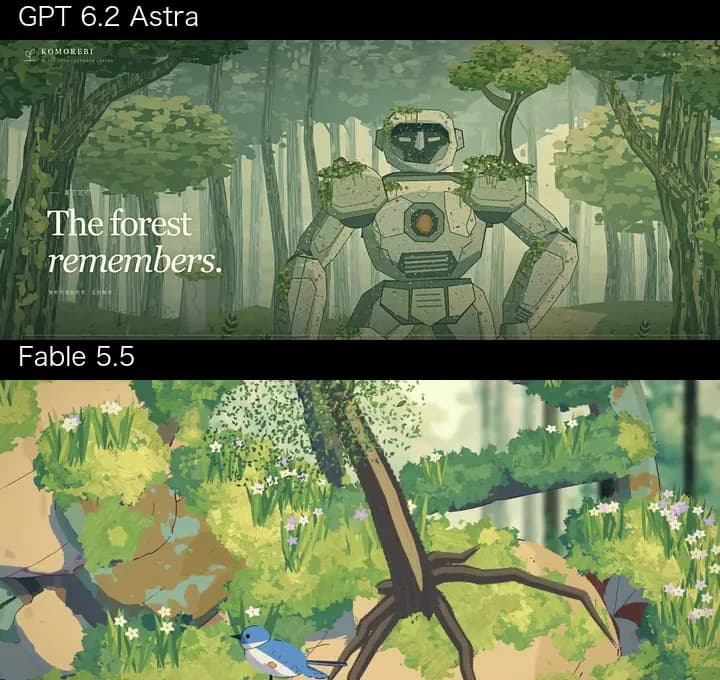
The disagreement gets at a creative challenge in code animation. Making a sequence involves organizing objects, choosing where viewers look first, deciding how long an action lasts, and connecting one scene to the next. Those choices shape the experience of watching a complete piece.
For product explainers, data stories and short films, storytelling and revision effort directly affect the work involved. Reordering two scenes or correcting a label while keeping transitions and pacing coherent is a useful direction to watch.
What development tasks could Astra’s visual coding demos support?
| Example | Main attraction | Potential workflow |
|---|---|---|
| Cycling pelican | Coordinating character motion, track and camera | Interactive explanations, web animation, visual prototypes. |
| SVG controller | Geometric proportions, buttons and material detail | Product illustration and editable vector assets. |
| 3D RPG | Connecting a scene, character and several interface systems | Gameplay exploration, interaction prototypes and play iteration. |
| Code-animation comparison | Composition, storytelling and transition timing | Product shorts, data stories and animated demos. |
Together, they point toward an ambition: use natural language to organize more complete creative work, then keep the code available for further editing.
What do Codex users want from Astra: better coding or longer usage limits?
Other replies make the upgrade question more specific. TrapRmExit reserves existing Astra for difficult coding problems, while Somethingexpected hopes a successor could deliver similar quality at a lower task cost. Those are two routes to a worthwhile upgrade: solve harder problems, or make familiar work more economical.
Their tasks, plans and working patterns differ. The outcome everyday users care about is similar: how much work can they finish in a continuous session?
For someone who repeatedly revises code, an attractive first draft is only the start. Fixing interactions, correcting mistakes and rerunning tests keep consuming time and allowance. If another Astra reduces those cycles, the improvement in working efficiency could matter more than a striking difference in the first image.
That also makes the total cost of a completed task worth examining: the number of attempts, time spent running tools, and developer correction all affect the eventual choice.
Is GPT-6.2 Astra worth waiting for? How to judge an upgrade
Keep current projects moving while saving recurring problems. That might be an animation with awkward movement or an inventory that fails after a scene change. When another model becomes available, real tasks like these make useful comparisons.
The decision to switch depends on the work. Visual-prototype teams may care especially about animation and interaction; backend teams may prioritize engineering revisions, reliability and completion time. An upgrade that improves recurring problems is more likely to justify migration and maintenance effort.
Where can you follow GPT-6.2 Astra release updates?
Three concrete developments are worth following: OpenAI’s release plans, developer work accompanied by source and revision history, and the usage allowance and task-completion costs once access opens.
GPT-6.2 Astra FAQ
When will GPT-6.2 Astra be released?
As of November 3, 2026, a formal release date remains pending from OpenAI. Current discussion follows Codex usage labels and community demos.
Is GPT-6.2 Astra already available in Codex?
What does the 1.6% usage figure mean?
It is the usage share shown for one account in the October 25–31 seven-day view. That page tracks plan usage for Work, Codex and other agent tasks.
How does code become an animation in these examples?
These demos focus on code-rendered graphics and animation, with authors sharing recordings of the results. SVG suits vector graphics, while web graphics and 3D scenes can support motion, cameras and interaction.
How does the community compare Astra and Fable animation?
Leo’s comparison favors Fable on detail and script design. It gives further observation a practical focus: visuals, storytelling, pacing and ease of revision.
Which model made OpenAI’s official film?
OpenAI has yet to disclose a production model. The film’s OAI visual clue and speculation about another model are part of the surrounding community conversation.
Where do the names Astra, Bel and Betelgeuse come from?
What improvements do developers most want from another Astra?
Alongside more complete visual and interactive work, discussion focuses on usable session time, revision efficiency and total task cost. Less rework and more completed work per session are practical expectations.