Why an AI UGC Voice Sounds Robotic and What to Fix First
Find out why AI UGC voice sounds robotic. Diagnose timing, pronunciation and delivery before regenerating a clip.
 JessieCOO
On this page
Listen to the voice without watching the picture. Decide whether the problem comes from the wording, the reading, the recording or the edit. Fix one layer at a time so you can hear what changed.
The examples show how to diagnose a hypothetical organizer ad. They are written examples, not measured listening tests.
Start with the words
A line such as “Maximize your travel organization through our advanced compartmentalized solution” is hard to speak naturally, even for a person. Read it without performing. Mark the phrase you automatically replace. A more concrete line is “The charger goes in this pocket. The short cable fits beside it.” Verify that the product really has that pocket and that those items fit.
If a long clause needs to fit a short shot, remove an idea or put the second phrase over a relevant cutaway. Do not expect more punctuation or a slower voice to repair a sentence that has too many claims.
Find out where the voice goes wrong
| What you hear | Quick isolation test | Possible fix |
|---|---|---|
| Formal, promotional phrasing | Read the same line aloud without acting | Shorten it and name a physical action |
| Wrong stress or a misread name | Listen to the line by itself | Apply supported pronunciation controls or use an approved recording |
| Every sentence has the same cadence | Compare the sentence break with what is happening on screen | Put a useful pause before the action and give each line one job |
| A metallic texture or uneven level | Compare the raw output and the final export | Identify whether synthesis or processing introduced it |
| A jump in voice or room tone | Listen on both sides of the edit without the picture | Use compatible audio or a continuous track when the footage permits |
Run a small listening comparison
Keep the recorded wording identical when testing voice direction. Keep the voice settings identical when testing a script rewrite. Label versions so you can find the winning edit but, when possible, let a reviewer listen without knowing which one is new.
Ask the reviewer to repeat the product claims and flag any place they need a second listen. Give them specific criteria: brand name clear, sentence breaks make sense, main detail audible and volume stable. A more expressive voice is not a pass if it introduces a new statement about the product.
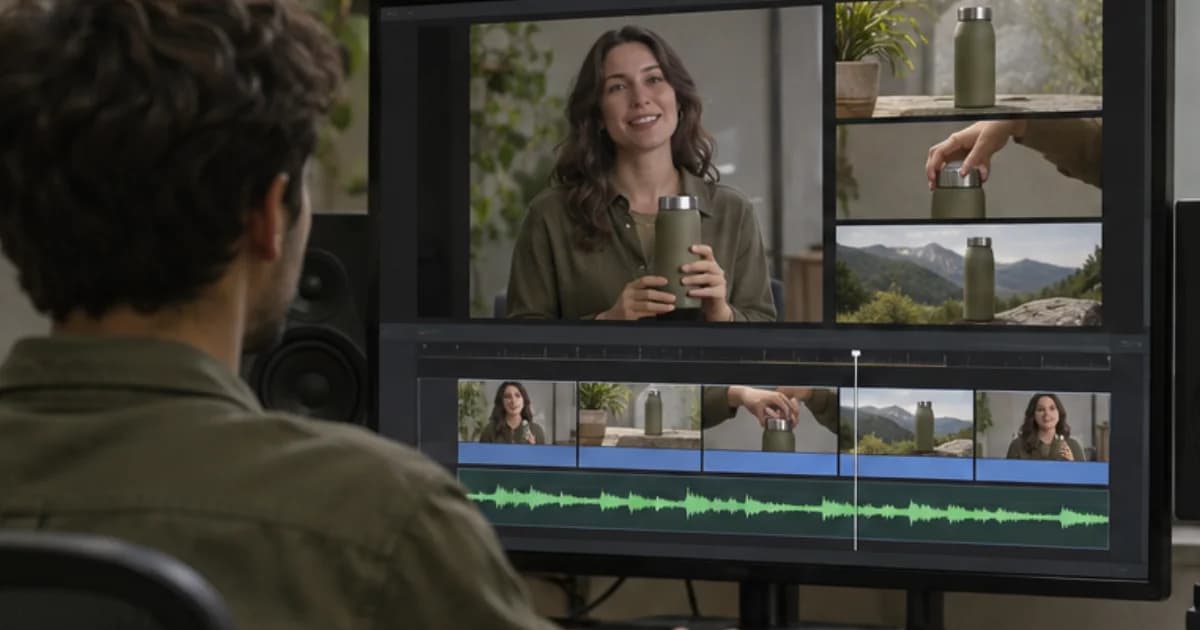
After approving a voice track, return to the picture. If the last word ends after the mouth closes, fix the timing or use a relevant product cutaway. Keep the final audio and transcript together. A second editor should be able to replace one sentence without rebuilding the entire clip.