

Claude Sonnet 5 Cost Impact: How to Recalculate Budgets After the Tokenizer Change

Anthropic notes that Claude Sonnet 5 uses a new tokenizer and that the same input text can produce about 30% more tokens than on Sonnet 4.6. That does not mean every request becomes exactly 30% more expensive. It does mean old budget baselines are no longer reliable.
Direct Verdict
| Your situation | Recommended move | Why |
|---|---|---|
| Sonnet 4.6 tasks often need retries or human cleanup | Test Sonnet 5 first | Higher token counts can be offset by fewer failed attempts |
| Sonnet 4.6 already handles high-volume traffic reliably | Do not migrate globally | Token-count changes may increase effective cost without enough upside |
| Your prompts include codebases, documents, or tool traces | Recount token budgets first | Long context amplifies tokenizer changes |
| Your system prompts are highly repeated | Evaluate cache impact | Stable prefixes can reduce effective input cost |
| You lack workflow-level token and retry logs | Add observability first | Without traces, the cost change cannot be measured |
| You only compare request prices | Switch to accepted-result cost | Production cost includes retries, validation failures, cleanup, and fallback |
Who This Article Is For
This article is for teams that already have Sonnet 4.6 or Claude-family production traffic, especially if they run:
- coding agents, code review, support agents, internal operations agents, or long-document analysis;
- finance, operations, or platform reporting around model spend;
- token, cache, retry, p95 latency, fallback, and rollout-cost monitoring;
- model-routing decisions where Sonnet 5 should not automatically handle every request.
Why Token Price Is Not Enough
Production model cost is rarely just input tokens plus output tokens. A real workflow can include:
- prompt construction;
- historical context assembly;
- tool calls;
- intermediate reasoning;
- structured-output validation;
- retries after failure;
- fallback to another model route;
- human review or cleanup.
The better formula is:
Total cost per accepted result
= first request cost
+ retry cost
+ tool and context cost
+ cache hit or miss impact
+ fallback route cost
+ human cleanup cost
If Sonnet 5 increases token count but reduces retries and cleanup by more, total workflow cost can fall. If your current workflow is already short, stable, and low risk, the token increase can simply become a higher effective cost.
Which Workloads Are Most Exposed?
Tokenizer impact is not evenly distributed. A short support reply and a long coding-agent trace have very different risk profiles.
| Workload | Cost risk | What to measure | EvoLink routing action |
|---|---|---|---|
| Short support replies | Low to moderate | Token count, latency, accepted response rate | Keep current low-cost route first |
| Coding-agent sessions | High | Full trace tokens, tool outputs, retries, merge rate | Canary Sonnet 5 on a small slice |
| Multi-file code review | High | Input context, output length, human edits | Use Sonnet 5 as a high-value candidate |
| Long-document analysis | High | Context fit, truncation, cache hit rate | Add input caps and chunking rules |
| Repeated system-prompt workflows | Moderate | Cache hit rate and stable-prefix tokens | Combine caching with routing controls |
| Structured-output generation | Moderate | Validation failures and retry count | Fix schema and retry strategy first |
| Bulk low-risk generation | Moderate to high | Per-task tokens, throughput, total bill | Usually do not prioritize Sonnet 5 |
This table is not asking whether Sonnet 5 is expensive. It is asking which tasks deserve a different budget strategy. EvoLink's value is that this decision can live at the routing layer instead of being scattered across application code.
How the Tokenizer Change Can Amplify Cost
A historical prompt that looked safe under Sonnet 4.6 may sit closer to context or output limits after the migration. The impact usually appears in five places:
- the same underlying text counts as more tokens;
max_tokensvalues tuned for Sonnet 4.6 may truncate more often;- long-context requests need more careful retrieval, summarization, or chunking;
- cache economics change when token counts change;
- usage alerts and budget thresholds need a new baseline.
Avoid one common mistake: the about-30% tokenizer note is not a fixed price increase formula. It is a budget-risk signal telling you to recount your own real prompts.
When Sonnet 5 Can Be Cheaper
Sonnet 5 can be cheaper when the task path becomes shorter, even if each attempt is heavier.
That can happen when:
- coding agents need fewer repair loops;
- code review output needs fewer human edits;
- long-document analysis requires fewer follow-up prompts;
- internal agents trigger fewer human handoffs;
- structured outputs fail validation less often.
| Cost path | Likely outcome |
|---|---|
| Tokens increase, but retries drop materially | Total cost may fall |
| Tokens increase, retries stay the same | Total cost likely rises |
| Tokens increase, output improves, but review load stays the same | Business value must justify the spend |
| Tokens increase, cache hit rate improves | Budget may stay stable |
| Tokens increase and fallback triggers often | Pause migration and inspect routing |
That is why Sonnet 5 cost evaluation is not only a finance spreadsheet. Product, engineering, platform, and operations teams all need to inspect the full path to a completed task.
Budget Controls on EvoLink
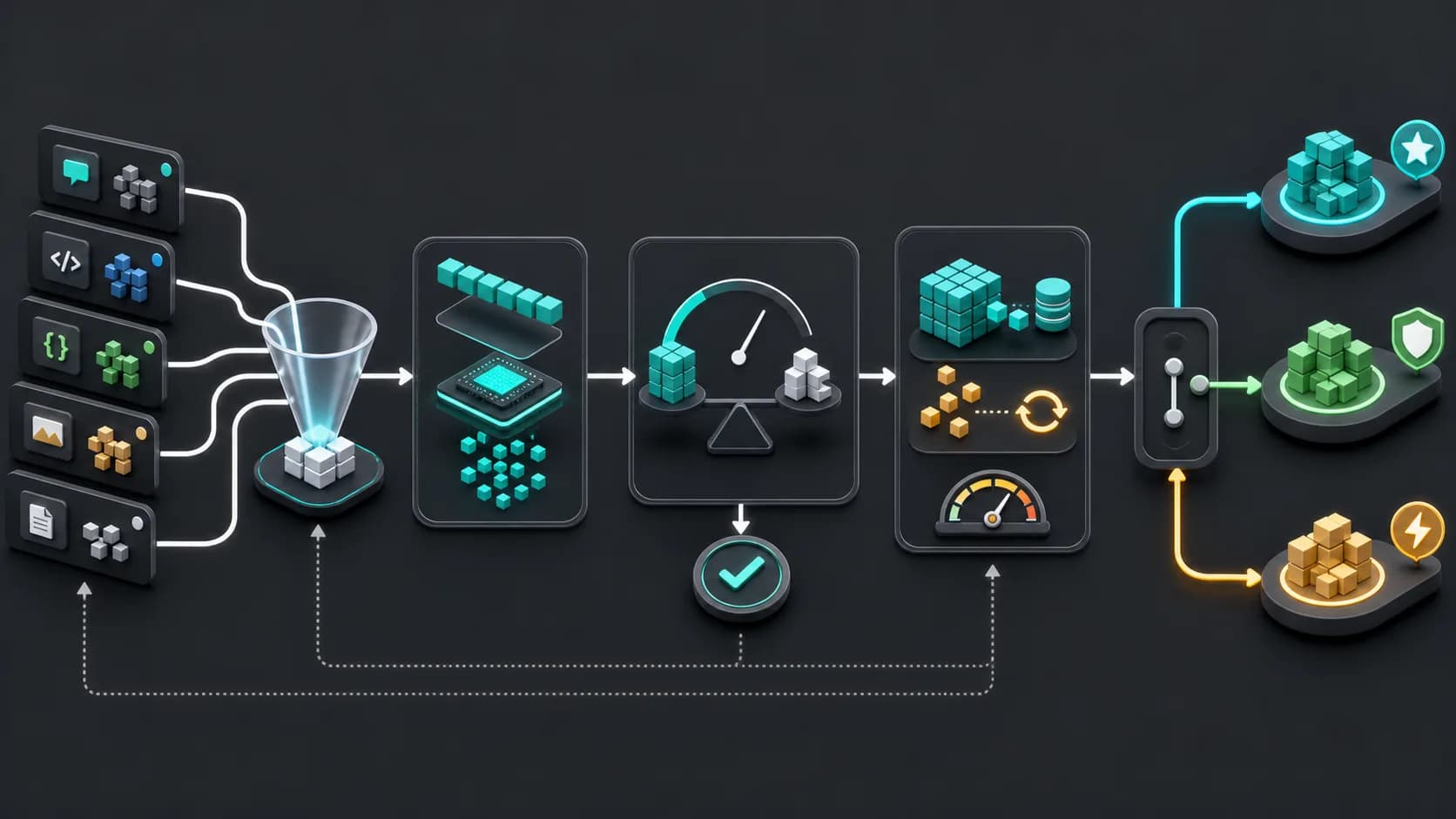
On EvoLink, budget control should not depend only on prompt caching or manual spend limits. A stronger approach is to control model cost at the routing layer:
| Control | How it works | Problem it solves |
|---|---|---|
| Route by task | Send simple tasks to low-cost routes and test Sonnet 5 on high-value tasks | Avoids making every request a stronger-model request |
| Keep fallback | Return to Sonnet 4.6 or another stable route when Sonnet 5 is abnormal | Controls error-rate and cost spikes |
| Cap input size | Use retrieval, summarization, chunking, or trimming for long context | Prevents context from expanding silently |
| Log tokens by workflow | Track a complete task, not only a single request | Reveals real business cost |
| Cache stable prefixes | Evaluate caching for system prompts, tool instructions, and policy context | Lowers repeated input cost |
| Monitor retries | Count schema failures, parameter errors, and tool failures as cost | Prevents hidden cost from being ignored |
This is why the migration should not be hardcoded across application services. Let EvoLink handle model selection, canary rollout, fallback, and budget monitoring as a unified API gateway.
50-Task Replay Method
Before moving broad traffic, do not judge cost from a few short prompts. A better method is to replay 50 real Sonnet 4.6 tasks.
| Step | What to do | Pass criteria |
|---|---|---|
| Select samples | Pick 50 real tasks across success, failure, long-context, and high-volume cases | The sample reflects production traffic |
| Recount tokens | Re-measure input, output, and tool traces under the Sonnet 5 path | Task-level token difference is visible |
| Replay with same criteria | Compare outputs using the same acceptance rules | No vague "it feels better" grading |
| Log retries | Count validation failures, tool failures, and human edits | Cost accounting is complete |
| Estimate total cost | Calculate cost per accepted result | Decision is not based on one request |
| Assign routes | Decide which workflows get Sonnet 5 and which stay put | Canary strategy is explicit |
At minimum, log:
- input tokens, output tokens, cache hits, and retry tokens per task;
- whether each task met acceptance criteria;
- p50 and p95 latency;
- validation failure count;
- fallback trigger count;
- human edit or review effort.
Where Prompt Caching Fits
Prompt caching is useful for repeated, stable, reusable content:
- long system prompts;
- policy or style guides;
- tool instructions;
- codebase summaries;
- fixed business rules;
- reusable context blocks.
It is less useful when every prompt is highly unique or changes substantially. Caching also does not replace routing strategy. It can lower part of repeated input cost, but the migration decision still depends on total workflow cost and acceptance rate.
When You Should Not Migrate
Do not move directly to Sonnet 5 when:
- requests are short, stable, high-volume, low-risk, and already handled well by Sonnet 4.6 or a cheaper route;
- you do not log token usage, retries, latency, and acceptance by workflow;
- clients still include old parameters that may trigger errors;
- prompts were heavily tuned around Sonnet 4.6 output shape;
- latency is critical and Sonnet 5 reasoning behavior has not been measured;
- fallback would be removed before the new budget baseline is stable.
In these cases, route design, observability, and input controls matter more than switching models immediately.
Evidence Boundary
Pricing can change, including introductory pricing windows and later vendor updates. Treat the EvoLink product page as the source of truth for current route pricing, and use Anthropic's pricing documentation as the vendor-level reference.
This article does not interpret the about-30% tokenizer note as a fixed price increase, and it does not treat a single benchmark as a production-cost conclusion. The reliable evidence is your own workflow traces: token usage, cache hits, retries, latency, fallback rate, and accepted outputs.
To apply this cost baseline to the Sonnet 5.5 upgrade, use the Sonnet 5.5 vs Sonnet 5 evaluation guide.
Related EvoLink Reading
- Use the Claude Sonnet 5 product page for current access, route pricing, and product details.
- Read Claude Sonnet 5 vs Sonnet 4.6 before moving existing Sonnet traffic.
- Review Claude Sonnet 5 for coding agents if your largest cost exposure comes from agent traces, tool calls, and test repair loops.
Final Recommendation
Claude Sonnet 5 cost impact is not a price-table problem. It is a production-routing problem.
The safer approach is:
- replay real Sonnet 4.6 tasks with Sonnet 5;
- evaluate cost per accepted result, not cost per request;
- move high-value, complex, retry-heavy tasks first;
- keep low-cost routes for short, stable, low-risk work;
- use EvoLink routing, fallback, caching, and monitoring together to control budget.
FAQ
Does Claude Sonnet 5 always cost more than Sonnet 4.6?
Not necessarily. The new tokenizer can increase token counts, but Sonnet 5 can still lower total cost if it reduces retries, validation failures, or human cleanup.
Where should I check current route pricing?
What is the most important budget check?
Recount real tasks and compare cost per accepted result. Short toy prompts rarely show the impact of long traces, tool outputs, caching, and retries.
Does about 30% more tokens mean 30% more cost?
No. It means the same text can produce more tokens under the new tokenizer. Final cost also depends on output length, caching, retries, fallback, and acceptance rate.
Does prompt caching solve the tokenizer impact?
Only partly. It can reduce repeated input cost, but it does not replace token measurement, task routing, input caps, or fallback strategy.
Should long-context requests be capped?
Yes. Long context is valuable, but production systems still need retrieval, summarization, chunking, trimming, or input caps.
Which metrics should finance or operations watch?
Cost per completed workflow, token usage by task type, cache hit rate, retry rate, fallback rate, p95 latency, and human edit effort.
Can Sonnet 5 be cheaper in practice?
Yes. If it reduces enough retries, cleanup, or tool rounds, it can offset higher token counts.
Should every request move to Sonnet 5?
No. Route high-value or difficult tasks to Sonnet 5 first and keep routine stable traffic on the right low-cost route.
Does this article replace the product page?
No. The product page owns current pricing, access, model identifiers, and specifications. This article helps teams decide budget and routing strategy.


