

Claude Sonnet 5 for Coding Agents: Default Route, Escalation, and Fallback Design

Direct Verdict
| Task situation | Recommended route | Why |
|---|---|---|
| Multi-file implementation, test repair, code review | Sonnet 5 as the primary candidate | Balances coding quality, tool use, and context retention |
| Simple explanation, formatting, bulk docs | Low-cost route first | Not every helper task needs a stronger route |
| Architecture, security, billing, or data risk | Escalate to Opus/Fable-class route | Error cost is higher than model cost |
| Sonnet 5 fails repeatedly or tool loops repeat | Escalate or summarize state before retry | Blind retries increase token and time cost |
| New model behavior is unstable, latency spikes, or structured output fails | Return to a stable fallback route | Fallback is production capability, not only outage handling |
| You lack patch, test, retry, and tool-call metrics | Add observability first | You cannot prove whether Sonnet 5 saves developer time |
Who This Article Is For
This article is for teams building or operating coding agents, especially if they have:
- Claude Code-style workflows, repo Q&A, code review, test generation, or automated repair;
- routing decisions across quality, latency, cost, fallback, and tool-call reliability;
- historical traces from Sonnet 4.6, Opus, or another coding model;
- a need to manage multi-model routing through EvoLink's unified API gateway instead of hardcoding model choice in application services.
Coding Agents Are Not Normal Chat
Coding agents are harder to evaluate than chat because they do not just produce one answer. A real coding agent often needs to:
- read multiple files;
- build an edit plan;
- call search, edit, test, or build tools;
- interpret failure logs;
- re-plan and repair;
- produce a patch, PR summary, or review;
- preserve state across multiple turns.
That means routing cannot be based only on whether a model is "smarter." You also need to measure whether it completes tool sequences, avoids useless repair loops, reduces human cleanup, lowers cost per merged change, and triggers escalation or fallback clearly when it fails.
Where Sonnet 5 Fits Best
Sonnet 5 is best positioned for medium-to-high complexity coding-agent work that needs stable reasoning but does not always require the top route.
| Coding-agent task | Sonnet 5 fit | Routing recommendation |
|---|---|---|
| Single-file implementation | Good, but classify first | Simple tasks can start lower-cost, then move to Sonnet 5 after failure |
| Multi-file refactor | Strong fit | Use Sonnet 5 as the main implementation route |
| Repo-wide code review | Strong fit, risk-dependent | Normal review on Sonnet 5, high-risk review escalates |
| Test generation and repair | Strong fit | Retry once on Sonnet 5, then escalate if it still fails |
| Long trace debugging | Good with context control | Use Sonnet 5 with summarization and fallback |
| Architecture migration plan | Cautious fit | Medium risk can start on Sonnet 5, high risk should escalate |
| Bulk docs and comments | Not always | Low-cost route first, upgrade only when quality requires it |
| Security, billing, or destructive data changes | Do not rely on Sonnet 5 alone | Escalate and add human review |
The point is not that Sonnet 5 is only for expensive tasks. It is the balanced main route candidate inside a coding-agent system.
When Sonnet 5 Should Not Be the Default
Do not make Sonnet 5 the default for every coding-agent task when:
- most tasks are code explanation, formatting, comments, or simple docs;
- the agent has no task classification layer;
- tool calls, test results, retries, and cleanup time are not logged;
- prompts are tightly bound to an older model's output shape;
- cost targets are stricter than quality targets;
- failures do not have clear fallback or escalation actions.
Without those basics, switching everything to Sonnet 5 can hide cost and quality problems instead of solving them.
When to Escalate to Opus/Fable-Class Routes
Opus/Fable-class routes should be deliberate escalation paths, not the default for every coding prompt.
| Escalation signal | Why escalate | Risk if you do not |
|---|---|---|
| Major architecture direction | Long-term system design is affected | Weak plans get reused |
| Security, permission, billing, or data risk | Error cost is very high | Production or compliance incidents |
| Sonnet 5 fails twice | More retries have low value | Token and time cost keep rising |
| Complex cross-service dependencies | Stronger global reasoning is needed | Local fixes break the system |
| Migration plan will be executed by multiple people | The output becomes engineering source material | Bad plans spread |
| Final audit finds inconsistency | Independent judgment is needed | Same-model blind spots remain |
If your team manages model calls through EvoLink, these escalation signals can become workflow or routing rules rather than one-off decisions in every service.
Three-Layer Coding-Agent Routing on EvoLink
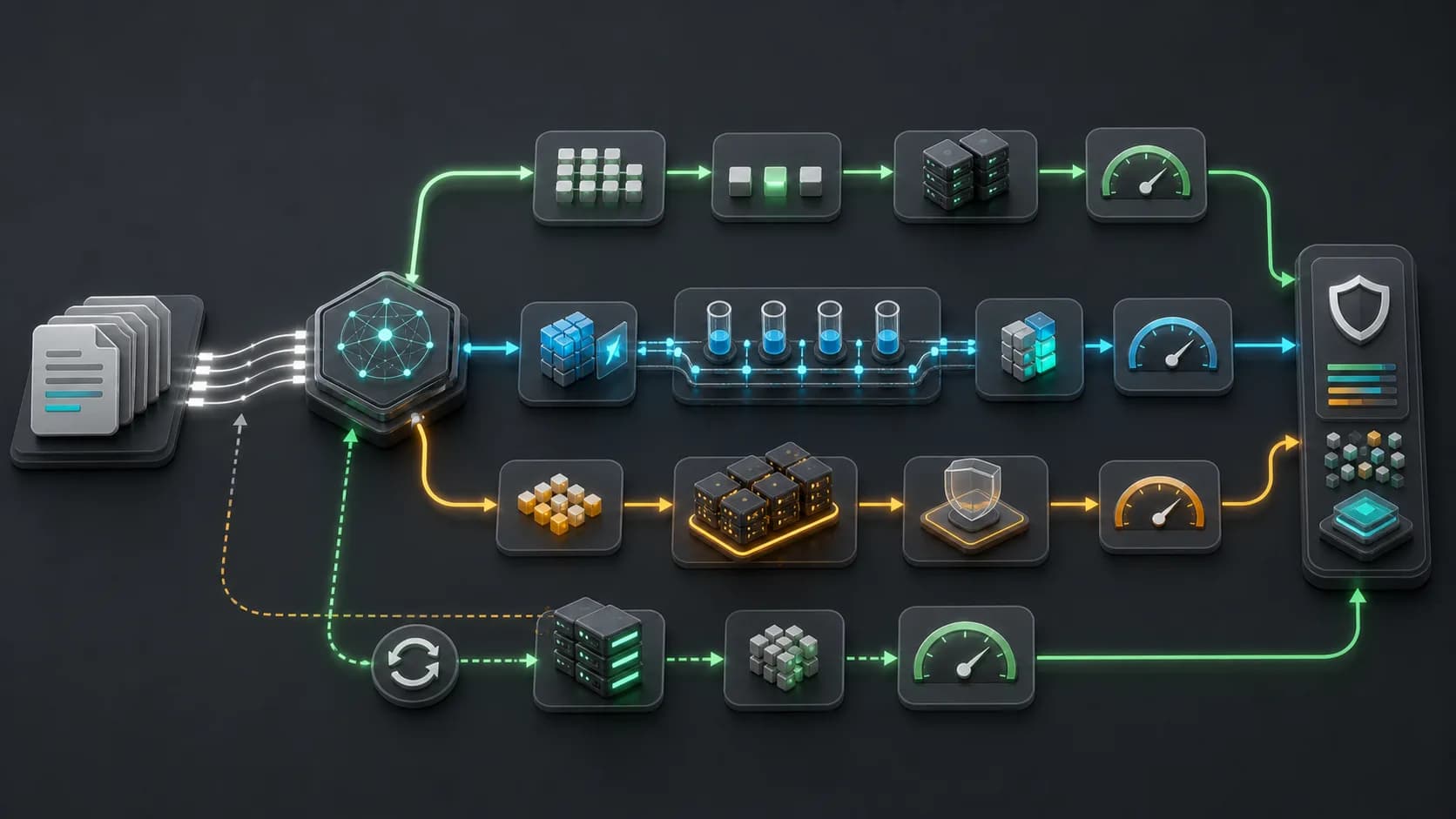
A stable EvoLink coding-agent architecture usually has three layers:
| Route layer | Best-fit tasks | Design goal |
|---|---|---|
| Low-cost helper layer | Task classification, simple explanation, formatting, bulk docs, low-risk summaries | Avoid unnecessary Sonnet/Opus spend |
| Sonnet 5 implementation layer | Multi-file implementation, code review, test generation, test repair, long trace debugging | Balance quality, cost, and agent behavior |
| Opus/Fable escalation layer | High-risk architecture, security, billing, data, complex migration, final audit | Control error cost and long-term decision risk |
| Fallback layer | Previous stable route or another proven coding model | Handle latency, quality regression, parameter errors, or behavior changes |
This design turns a model upgrade into a routing-policy change instead of a full rewrite of coding-agent traffic.
Fallback Is Not Optional
Coding-agent fallback is not only for provider outages. It is also for model behavior changes, context overflow, structured-output failures, and tool loops.
| Failure mode | Recommended action |
|---|---|
| Unsupported parameter or request error | Clean request config and retry, do not blindly switch models |
| Structured output fails validation | Retry once with stricter schema instructions |
| Tool loop repeats | Summarize current state, compress context, then decide whether to escalate |
| Tests fail repeatedly | Retry once on Sonnet 5, then escalate |
| Context is too long | Retrieve, summarize, split, or trim instead of only increasing budget |
| Quality regresses versus stable baseline | Route back to known-good baseline and log the sample |
| Latency is abnormal | Use lighter route for non-critical work and keep escalation for high-risk work |
Without fallback, it is difficult to canary a new model safely. Quality swings, cost spikes, and user complaints often appear only after the routing guardrails were missing.
What to Measure
Coding-agent quality should be measured by completed engineering work, not by model preference or single-turn answer quality.
| Metric | Why it matters |
|---|---|
| Patch acceptance rate | Whether output can enter the real development flow |
| Test pass rate | Whether generated code works |
| Retry count | Hidden cost and developer friction |
| Tool-call success rate | Agent reliability |
| Cost per merged change | Maps model spend to business output |
| Human cleanup time | Whether the route saves developer effort |
| Fallback trigger rate | Whether the new route is stable |
| Final audit finding rate | Captures same-model blind spots and review value |
Before making Sonnet 5 the default, replay at least 20-50 real coding-agent tasks, including successful tasks, failed tasks, multi-file tasks, and test-repair tasks.
Recommended Rollout Path
Do not start with a global coding-agent replacement. Use a staged path:
| Phase | What to do | Pass criteria |
|---|---|---|
| Replay | Compare historical coding-agent traces on the old route and Sonnet 5 | Output is acceptable and structure remains valid |
| Canary | Send a small percentage of real tasks to Sonnet 5 | Error rate, latency, and cost stay within thresholds |
| Task split | Move multi-file implementation and test repair first | Patch acceptance or retry rate improves |
| Escalation rules | Define when to move to Opus/Fable | Failure and high-risk tasks have explicit paths |
| Fallback review | Keep or adjust the previous stable route | Fallback triggers are explainable |
| Default decision | Decide whether Sonnet 5 becomes the default coding-agent route | Cost per merged change and quality meet targets |
This is slower than switching after a benchmark, but it is a better fit for production coding agents.
Next Step on EvoLink
If your coding-agent traces change materially, rerun the routing replay and update your escalation rules before changing default traffic.
Preparing your next coding-agent model evaluation? Preserve your baseline with the Sonnet 5.5 vs Sonnet 5 upgrade checklist.
Related Reading
- Use the Claude Sonnet 5 product page for current product information.
- Read Claude Sonnet 5 vs Sonnet 4.6 before moving existing traffic.
- Review budget effects in Claude Sonnet 5 cost impact.
- Compare broader coding-model choices in best LLM for coding agents.
Final Recommendation
Claude Sonnet 5 is a strong default candidate for coding agents, but "default candidate" does not mean "send every task to it."
The more reliable design is:
- use low-cost routes for classification and simple helper work;
- use Sonnet 5 for multi-file implementation, code review, test repair, and long trace debugging;
- escalate high-risk architecture, security, billing, data, and complex migration tasks to Opus/Fable-class routes;
- keep stable fallback available;
- decide default status using patch acceptance, test pass rate, retries, tool-call success, and cost per merged change.
If your coding agent already has real traces, the next step is not a global switch. Use EvoLink for replay, canary, and layered routing.
FAQ
Should Claude Sonnet 5 be the default model for coding agents?
It can be a strong default candidate if you have task classification, fallback, and observability. Simple tasks and high-risk tasks should still be routed differently.
When should I use Opus or Fable-class routes?
Use higher-quality routes for architecture, security, billing, data, compliance, repeated Sonnet failures, or decisions that will guide long-term engineering work.
Is Sonnet 5 enough for Claude Code-style workflows?
It is worth testing first because coding and agentic tasks are a major improvement area. Whether it is enough depends on real trace metrics such as patch acceptance, test pass rate, and retries.
Should simple code tasks use Sonnet 5?
Not always. Code explanation, formatting, small helpers, and bulk documentation can often use lower-cost routes.
How do I avoid overspending on coding agents?
Classify tasks, cap context, cache stable prompts, monitor retries, and escalate only after clear failure or high-risk conditions.
What is the best fallback?
Keep the previous stable Sonnet route or another proven coding model available during migration. Choose fallback based on real task performance.
Should final code review use the same model?
When possible, use a different route for final audit. It can reduce blind spots from the implementation model.
What should I measure before making Sonnet 5 default?
Measure patch acceptance, test pass rate, retry count, tool-call success, fallback trigger rate, cost per merged change, and human cleanup time.
Can Sonnet 5 fully replace Opus?
Do not frame it that way. Sonnet 5 can handle many balanced coding tasks, while Opus/Fable-class routes remain useful for high-risk, high-complexity, and long-term decision work.
Does this article replace the product page?
No. The product page owns current product details. This article helps teams design coding-agent routing, escalation, and fallback strategy.


