

Nano Banana 2 Lite for Ecommerce and Social Ads: Low-Cost 1K Images

Fast Verdict
This is not a generic batch-generation article. It answers two production questions: how ecommerce teams can build a candidate pipeline for SKUs, hero images, support images, and localization; and how ad teams can test audience, hook, format, and creative angle before committing final-route budget.
Why Ecommerce And Ads Fit Lite
Ecommerce and ad creative both have high early rejection. Product images fail because of background, angle, crop, or merchandising rules. Ads fail because audience, hook, channel format, and thumbnail direction are still unknown.
| Scenario | Why the final route is too early | What Lite improves |
|---|---|---|
| Product listing images | Most backgrounds and angles do not survive review | Cheaper direction discovery |
| Product support images | Teams need to test explanatory layouts | Faster visual comparison |
| Regional localization | Visual preferences vary by market | More local candidates |
| Social ad concepts | Hook and visual angle are uncertain | Wider creative exploration |
| Thumbnail tests | Early review only needs attraction signals | Fast 1K shortlist candidates |
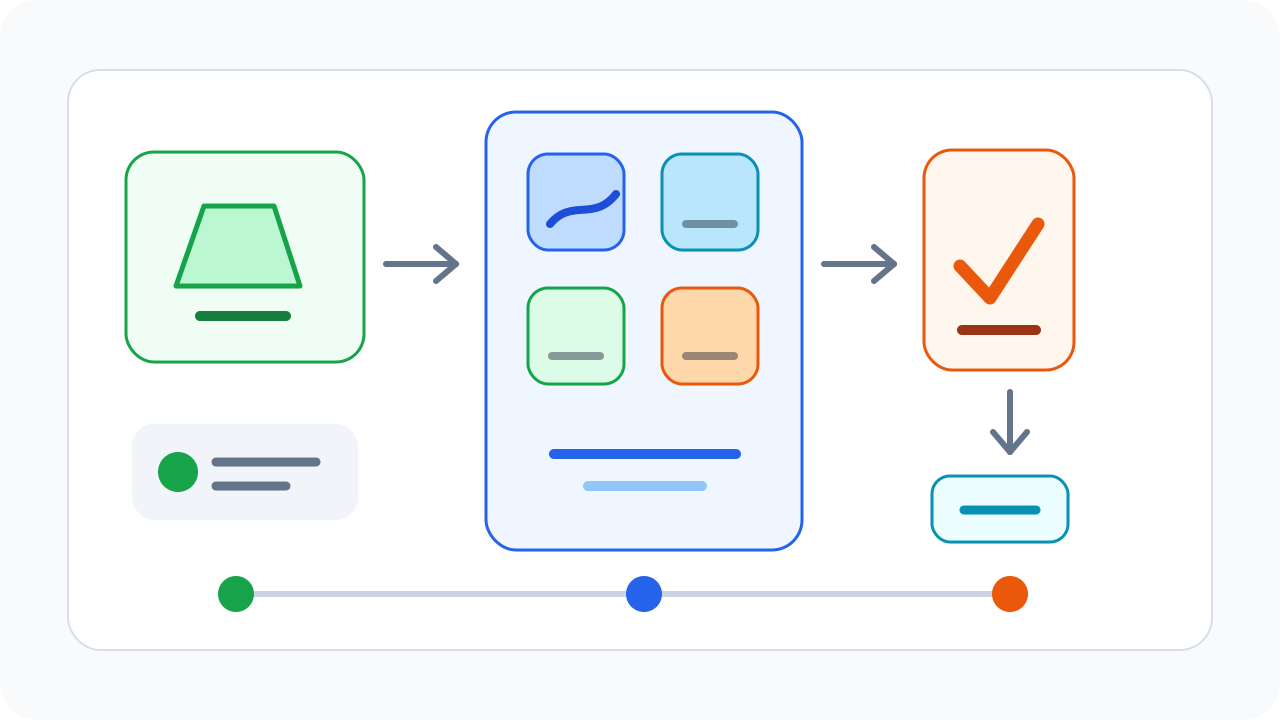
Ecommerce Asset Pipeline
Do not treat ecommerce generation as one prompt for one image. Split the asset system into hero image, support image, background, localization, and campaign material.
| Asset type | Lite stage | Review standard | Escalation point |
|---|---|---|---|
| Listing hero image | 6-10 background and composition candidates per SKU | Product clarity, clean background, stable subject scale | Enters hero-image shortlist |
| Support image | Usage scene, size explanation, bundle draft | Helps the buyer understand the product | Before product detail publishing |
| Background variant | Seasonal, lifestyle, clean, and campaign background tests | Matches campaign and brand rules | Becomes campaign material |
| Localized image | Region-specific visual candidates | Fits local audience expectations | Regional hero is selected |
| Bundle image | Multi-product layout exploration | Composition is readable | Used on landing page or homepage |
Lite should sit before final merchandising review. It helps teams discover direction; Nano Banana 2 protects the smaller set of final assets.
A SKU Task Example
For 80 SKUs, generating final images directly for every product wastes budget. A better flow is:
| Stage | Per SKU generation | Decision owner | Output |
|---|---|---|---|
| Background exploration | 4-6 1K candidates | Operations or merchandising | Background direction |
| Composition convergence | 3-5 variants in the selected direction | Design or merchandising | Shortlist |
| Final export | 1-2 approved images | Brand or paid media owner | Nano Banana 2 final image |
If the first round fails, fix product inputs, background constraints, composition rules, and prompt templates before raising the model tier.
Social Ad Testing Line
The point of ad creative is not to make one perfect image immediately. It is to find which direction deserves polishing before media budget is spent.
| Test dimension | Example | Lite output | What to measure |
|---|---|---|---|
| Audience | students, remote workers, fitness buyers | Visuals for different buyer groups | Which audience enters shortlist |
| Hook | discount, productivity, lifestyle, pain point | Different benefit visuals | Which hook gets accepted |
| Format | square, vertical, homepage card, thumbnail | Different crops and layouts | Which format stays stable |
| Creative angle | minimal studio, UGC, lifestyle, comparison | Different ad styles | Which direction deserves refinement |
| Refresh | lightweight retargeting variants | Frequent replacement candidates | Cost per accepted variant |
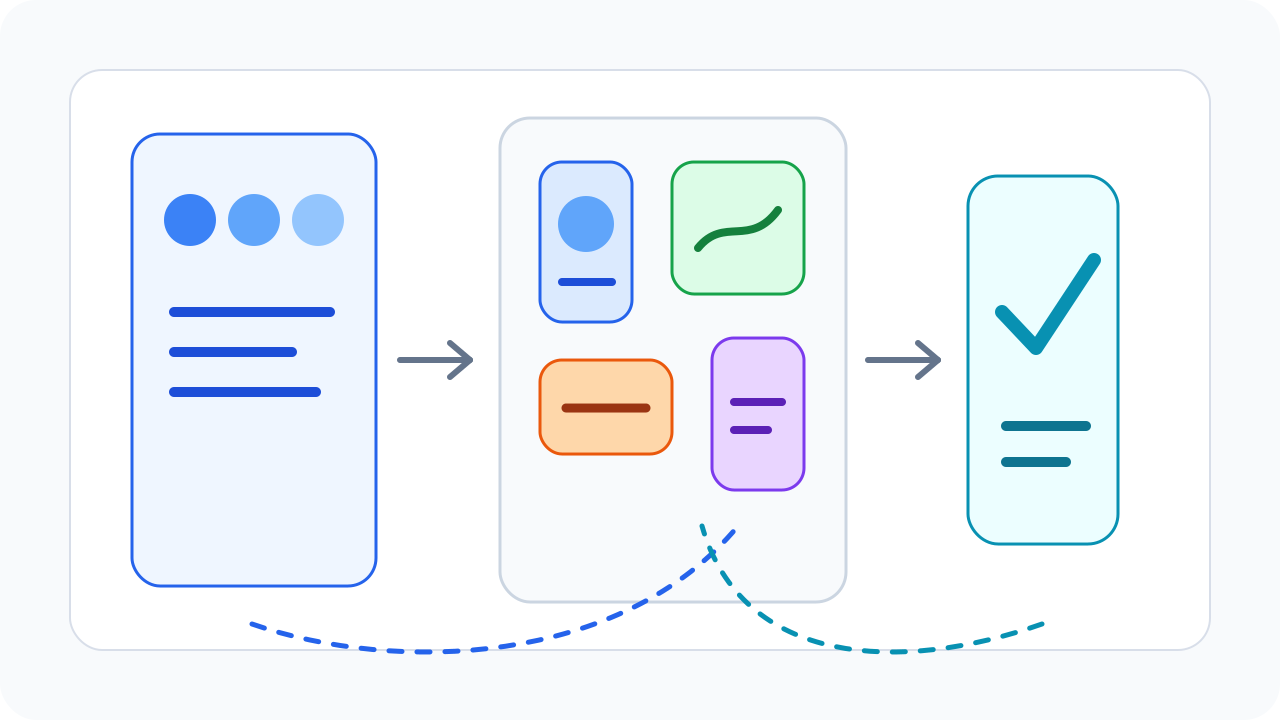
Campaign Example
| Stage | Volume | Goal | Recommended route |
|---|---|---|---|
| First direction spread | 10-20 images per audience or hook | Find promising visual directions | Nano Banana 2 Lite |
| Internal shortlist | No generation | Select 3-5 directions | No generation |
| Variant refinement | 5-8 per direction | Test format and background | Nano Banana 2 Lite |
| Final creative | 1-2 per channel | Produce paid or landing-page assets | Nano Banana 2 |
Lite carries exploration volume. Nano Banana 2 serves images that are likely to ship.
Prompt Input Matrix
| Field | Ecommerce example | Ad example |
|---|---|---|
| Subject | "wireless earbuds on a clean desk" | "young user using a productivity tool" |
| Audience | commuters, students, fitness buyers | new users, high-intent users, repeat buyers |
| Channel | marketplace listing, product detail page | Instagram square, TikTok vertical, homepage card |
| Visual angle | minimal studio, lifestyle desk | UGC style, discount campaign, problem-solution |
| Constraint | no text, single product, clean background | no text, clear subject, crop-safe |
| Escalation condition | hero candidate approved | enters paid creative shortlist |
Structured fields let EvoLink users compare accepted-output rates by route instead of judging only request cost.
EvoLink Routing Pattern
| Stage | Recommended route | Product reason |
|---|---|---|
| Product or ad exploration | Nano Banana 2 Lite | More candidate directions in the same budget window |
| Internal shortlist | No generation | Filter before spending again |
| Variant refinement | Nano Banana 2 Lite | Keep cost low while direction changes |
| Final export | Nano Banana 2 | Use higher-resolution route for assets that ship |
| Fallback | EvoLink model selection | Prevent SKU or campaign production from depending on one route |
The UI should separate "generate draft variants" from "export final image." That prevents users from treating Lite as the final quality tier for every case.
Metrics To Track Separately
| Metric | Ecommerce meaning | Ad meaning |
|---|---|---|
| Candidate acceptance rate | SKU images entering review | Creative directions entering shortlist |
| Background consistency | Product display quality | Campaign visual consistency |
| Final escalation rate | Candidates worth high-resolution export | Directions worth media spend |
| Rerun after final route | Final image rework | Final creative chosen too early |
| Attempts per accepted image | Real product-asset cost | Real creative-test cost |
Common Mistakes
| Mistake | Result | Better approach |
|---|---|---|
| Treating Lite as the final product-image route | Detail or resolution mismatch | Use Lite for candidates and escalate finals |
| Generating too many variants per SKU at once | Hard to learn which variable matters | Test background and composition in small batches |
| Changing only background for ads | Test is too narrow | Control audience, hook, and format |
| Not recording shortlist decisions | No signal on useful outputs | Track accepted candidates and escalation rate |
| Using final route for all exploration | Cost rises too early | Lite for exploration, Nano Banana 2 for delivery |
When To Avoid Lite
Do not use Lite as the final route when images need 2K/4K export, product detail inspection, packaging text, paid campaign hero placement, or strict brand review. Use Lite to find direction, then use Nano Banana 2 for the final version.
Relationship To The Batch Workflow Article
FAQ
Is Nano Banana 2 Lite good for ecommerce images?
Yes, for listing drafts, background exploration, support-image concepts, and localization candidates. Upgrade final hero images or detail-heavy images to Nano Banana 2.
Is Lite good for social ad creative?
Yes, especially for first-round hook, audience, format, and thumbnail tests before paid creative is finalized.
Should Lite generate final product images?
Only when 1K is enough and close detail review is not required. Hero images, paid ads, and brand-reviewed assets should usually escalate selected candidates.
How many variants should a campaign generate?
Start with 10-20 candidates per audience or hook. Expand only when the shortlist rate is healthy.
What should teams track?
For ecommerce, track candidate acceptance, background consistency, and final escalation. For ads, track creative shortlist rate, winning direction rate, and final-route reruns.


