

Claude Opus 4.8 vs Claude Opus 4.7: Upgrade Guide

On EvoLink, both models can remain behind the same unified API workflow while you compare them and move traffic gradually. The upgrade decision should be based on accepted task outcomes, not the model version number alone.
Claude Opus 4.8 vs 4.7: Quick Decision
| If your workload looks like this | Route first | Why |
|---|---|---|
| Long-running Claude Code or coding-agent sessions | Opus 4.8 | Best candidate for difficult, high-autonomy work |
| Repo-wide refactors, debugging, or code review | Opus 4.8 | Hard tasks are where an upgrade can create the most value |
| A stable 4.7 prompt with strict style requirements | Replay both | Newer does not guarantee a better style match |
| Latency-sensitive interactive coding | Opus 4.8 Fast Mode | The current fast route is cheaper than the legacy 4.7 Fast Mode |
| Simple extraction, classification, or drafting | A lower-cost Claude route | Opus-tier capability is usually unnecessary |
| Production migration without a rollback path | Keep 4.7 temporarily | Do not remove a known-good route before evaluation passes |
If you need one default rule, start new high-value Opus workloads on 4.8 and migrate existing 4.7 traffic by workload rather than all at once.
Confirmed Differences That Affect the Upgrade
| Area | Claude Opus 4.7 | Claude Opus 4.8 | Upgrade impact |
|---|---|---|---|
| Claude API model ID | claude-opus-4-7 | claude-opus-4-8 | Change the model ID or alias |
| Base pricing | $5 / MTok input, $25 / MTok output | $5 / MTok input, $25 / MTok output | Same Anthropic standard token price |
| Context window | 1M tokens | 1M tokens by default | No headline context increase |
| Maximum output | 128K tokens | 128K tokens | Same documented ceiling |
| API compatibility | Existing baseline | No breaking changes from 4.7 | No request-schema rewrite is required |
| Default effort | high | high | Recalibrated effort behavior still needs testing |
| Prompt cache minimum | 2,048 tokens | 1,024 tokens | More medium-size prompts can be cached |
| Mid-conversation system messages | Not supported in messages | Supported after a user turn | Instructions can change without rebuilding the full history |
| Fast Mode | $30 / $150 per MTok; removal scheduled July 24, 2026 | $10 / $50 per MTok; research preview | Move latency-sensitive traffic off the legacy fast route |
| Refusal details | Available but previously less visible | stop_details publicly documented | Refusal-aware logging and fallback become easier to design |
These are official model and API facts. They do not prove that 4.8 wins every prompt. Anthropic recommends re-baselining cost and latency at the effort level your application actually uses.
Is the 4.7-to-4.8 Migration Drop-In?
claude-opus-4-7 → claude-opus-4-8But “drop-in” should not be confused with “behavior-identical.” Check the following after the swap:
| Migration check | What changed or remains important | Pass condition |
|---|---|---|
| Effort | 4.8 defaults to high, but effort levels are recalibrated | Quality, latency, and cost pass at an explicit effort level |
| Sampling parameters | Non-default temperature, top_p, and top_k remain rejected | No legacy retry path tries to re-add them |
| Context header | 1M context is the default on 4.8 | Obsolete context beta header removed |
| Conversation instructions | Mid-conversation system messages are now supported | Long sessions preserve instructions and cache behavior |
| Refusal handling | stop_details is documented | Logs capture category and fallback behavior |
| Prompt caching | Cache minimum is lower | Medium recurring prompts produce expected cache hits |
| Output acceptance | Model behavior can still change | Real workload replay meets the review rubric |
For EvoLink users, keep the endpoint and surrounding integration stable while changing the model route. That isolates model behavior from unrelated application changes.
Where Opus 4.8 Is the Better First Choice
Long coding-agent sessions
Claude Code and internal coding agents rarely finish with one response. They inspect files, call tools, run tests, revise a plan, and continue after errors. Opus 4.8 is the better first route to evaluate when success depends on preserving direction across that entire trace.
Tool-heavy and instruction-changing workflows
Mid-conversation system messages give 4.8 a concrete workflow advantage. A team can update instructions after a user turn without reconstructing the full history, which can also help preserve earlier prompt-cache hits.
Medium-size recurring prompts
The prompt-cache minimum drops to 1,024 tokens. Agent policies, coding standards, and review rubrics that were too short to cache on 4.7 may become cacheable on 4.8.
Latency-sensitive Opus experiences
Fast Mode is relevant when the user is actively waiting: pair-programming flows, interactive coding assistants, or customer-facing agent dashboards. It is not automatically the best choice for background work.
When Keeping Opus 4.7 Still Makes Sense
Keep 4.7 as a temporary route when:
- an existing prompt is stable and style-sensitive
- your acceptance tests have not been replayed on 4.8
- a regulated workflow requires a controlled change window
- rollback must be possible without another deployment
- the workload is being migrated close to a release freeze
The reason to keep 4.7 is operational confidence, not a lower base token price. Anthropic lists the same standard input and output rates for both models.
Fast Mode: The Most Time-Sensitive Difference
As of July 18, 2026, Anthropic lists:
| Fast route | Input | Output | Lifecycle |
|---|---|---|---|
| Claude Opus 4.7 Fast Mode | $30 / MTok | $150 / MTok | Removal scheduled for July 24, 2026 |
| Claude Opus 4.8 Fast Mode | $10 / MTok | $50 / MTok | Research preview on the Claude API |
speed: "fast" is documented to return an error rather than silently fall back to standard speed. Teams relying on that route should treat migration as a lifecycle deadline.Use Fast Mode only when lower latency has measurable value. Standard speed is usually the better baseline for offline review, batch analysis, nightly evaluation, and background repair jobs.
A Reproducible Opus 4.8 vs 4.7 Evaluation
Public benchmark scores are useful context, but they do not predict whether a model will pass your repository, tools, prompts, and review policy. This page does not declare an EvoLink winner score without a controlled matched-workload dataset.
Instead, use a replay set that reflects the decision you are making:
| Evaluation task | Keep constant | Acceptance signal |
|---|---|---|
| Repository bug fix | Repo state, issue, tools, test command | Tests pass with no unrelated changes |
| Multi-file refactor | Scope, constraints, review rubric | Behavior preserved and diff accepted |
| Tool-use recovery | Tool definitions and injected failure | Agent diagnoses failure and completes safely |
| Long-session instruction update | History and instruction change point | New instruction applied without losing prior context |
| Style-sensitive business output | Template and human rubric | Output needs no more editing than the 4.7 baseline |
Track at least:
- accepted outcome rate
- retries and fallback calls
- wall-clock completion time
- input, output, and cache tokens
- human review or cleanup time
- total cost per accepted outcome
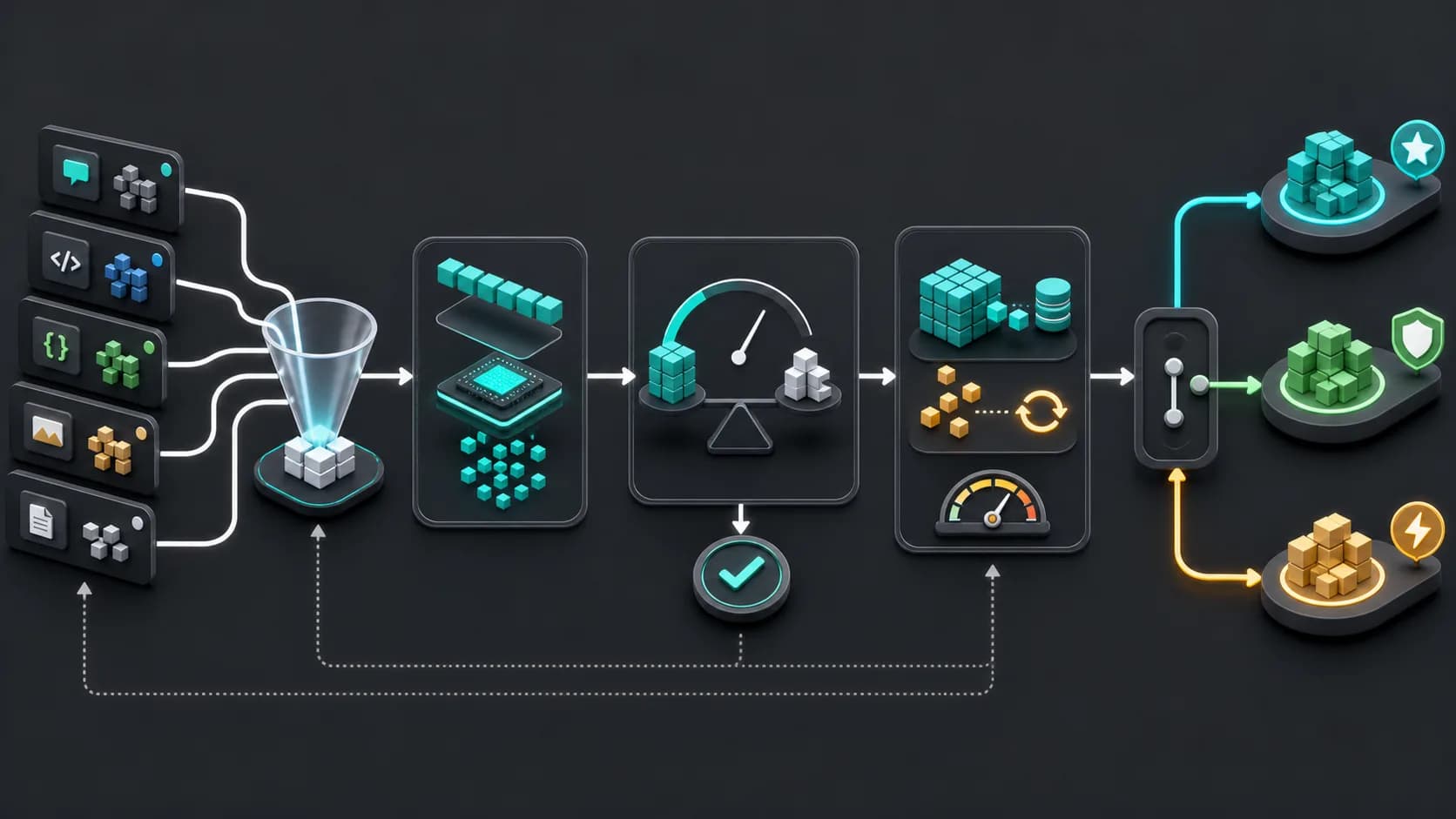
Why Equal Token Pricing Does Not Mean Equal Task Cost
Both models have the same official standard token price, but production cost can still differ.
cost per accepted outcome =
(model tokens + retries + fallbacks + review cost) / accepted outcomes
Opus 4.8 can be cheaper for a hard task if it reduces retries or manual cleanup. Opus 4.7 can remain cheaper operationally for a stable workflow if the output already passes and migration creates no additional value. Measure the whole task rather than one request.
Recommended EvoLink Rollout
| Stage | Traffic policy | Exit condition |
|---|---|---|
| 1. Shadow evaluation | Replay saved 4.7 traces on 4.8 | No blocking compatibility issue |
| 2. Limited production | Send a small share of hard tasks to 4.8 | Acceptance, latency, and cost stay within limits |
| 3. Workload promotion | Make 4.8 default for proven task classes | Rollback remains available |
| 4. Route cleanup | Remove unnecessary 4.7 traffic | Evaluation window and lifecycle checks complete |
Within EvoLink, keep routing explicit during the evaluation. Use Opus 4.8 for the workloads it wins, keep Opus 4.7 for rollback, and send simpler high-volume tasks to Sonnet or Haiku routes. One gateway makes this a model-selection change instead of a provider-integration rewrite.
When You Should Not Upgrade Yet
Do not make Opus 4.8 the default yet if:
- you cannot replay representative production work
- no one owns the acceptance rubric
- your application cannot observe retries or cost per task
- your current workload is simple enough for a cheaper Claude model
- removing Opus 4.7 would eliminate rollback during a critical release
The correct action is still to test 4.8—just not to replace every route blindly.
Continue on EvoLink
- Check current route details on Claude Opus 4.8.
- Keep Claude Opus 4.7 available during evaluation.
- Compare the broader family on the Claude API Family page.
- Use the Claude Opus 4.8 review for broader capability and production-fit coverage.
Sources
- Anthropic: Introducing Claude Opus 4.8
- Claude Platform: Migration guide
- Claude Platform: What's new in Claude Opus 4.8
- Claude Platform: Pricing and Fast Mode
- Claude Platform: Fast Mode
- Claude Platform: Models overview
FAQ
Is Claude Opus 4.8 better than Claude Opus 4.7?
Opus 4.8 is the better first model to test for difficult coding agents, tool-heavy workflows, and long sessions. It should still be compared against 4.7 on your own acceptance criteria rather than treated as a universal winner.
Does moving from Opus 4.7 to 4.8 require an API rewrite?
No. Anthropic says code already running on Opus 4.7 has no breaking API changes when moving to Opus 4.8. Change the model ID, then re-test behavior, effort, caching, latency, and cost.
Do Claude Opus 4.8 and 4.7 have the same price?
$5 / MTok input and $25 / MTok output. Fast Mode pricing differs substantially, and effective task cost can differ because of retries, output length, caching, and review effort.What is the Claude Opus 4.8 model ID?
claude-opus-4-8. On EvoLink, use the current model page and docs for route-specific request details.Should Claude Code users upgrade to Opus 4.8?
They should test it quickly on long sessions, repository-scale changes, tool recovery, and repeated debugging. Keep Opus 4.7 as rollback until 4.8 passes those traces.
What happens to Claude Opus 4.7 Fast Mode?
Anthropic schedules 4.7 Fast Mode for removal on July 24, 2026. Requests that continue to ask 4.7 for fast speed are documented to return an error after removal, so latency-sensitive traffic should migrate before that date.
When should a team keep Claude Opus 4.7?
Keep it temporarily for stable style-sensitive prompts, controlled migrations, and rollback. Its value is being a known baseline, not lower standard pricing.
How should EvoLink users compare the two models?
Replay the same repositories, prompts, tools, stop conditions, and review rubric through both routes. Compare accepted outcome rate, latency, retries, cache use, cleanup time, and total cost before changing defaults.


