Gemini Omni vs Seedance 2.0: API Status, Workflow Fit, and Production Readiness

So the decision is simple: if your team needs to ship video generation through an API now, start with Seedance 2.0 or another documented route. If your roadmap depends on Google-native conversational video editing, track Gemini Omni closely and wait for public API evidence before committing production code.
TL;DR
- Use Seedance 2.0 now when you need documented API routes, task-based generation, multimodal references, and 4-15 second video outputs.
- Watch Gemini Omni when you care about Google's future direction for conversational video creation, remixing, and "any input to video" workflows.
- Do not compare them as equally mature APIs. Gemini Omni is officially announced, but its current public launch is product-surface first, not API-docs first.
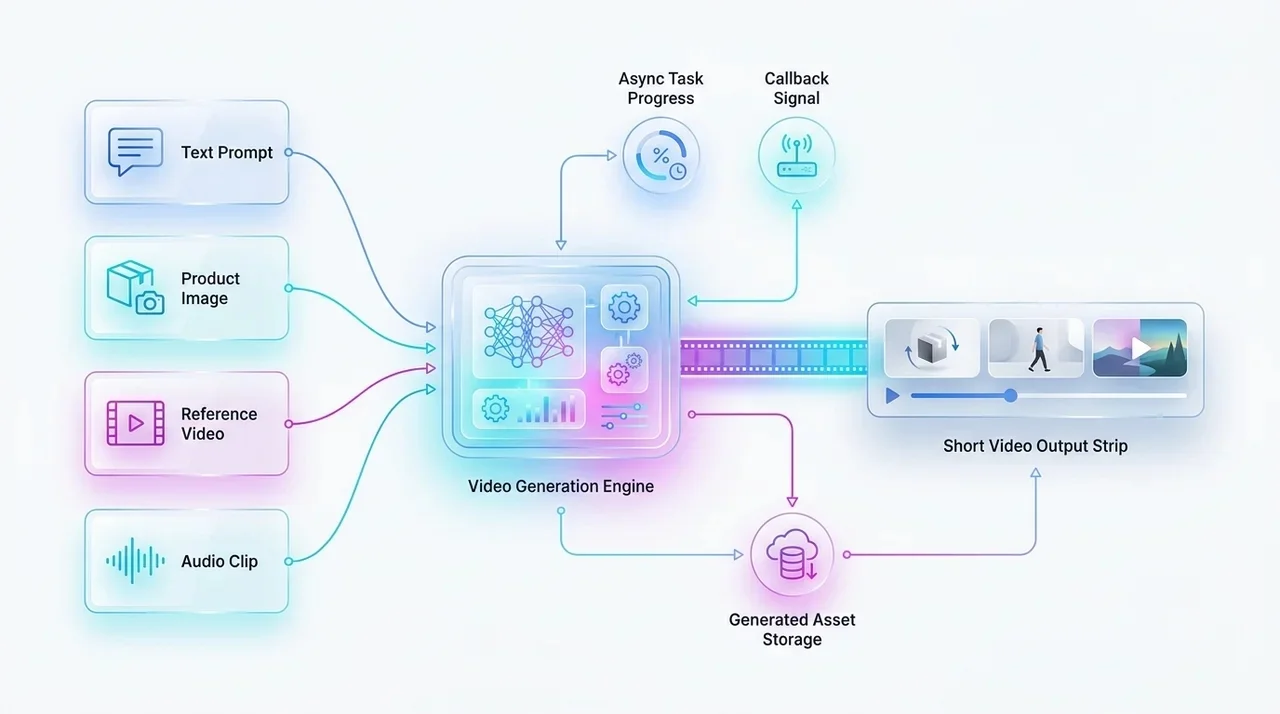
- The strongest Seedance 2.0 advantage is workflow control: text, image, video, and audio references can shape the generated video.
- The strongest Gemini Omni advantage is product direction: Google is bringing video creation deeper into Gemini, Flow, YouTube, and conversational editing surfaces.
- For production teams, the right architecture is not betting everything on one model. Put video generation behind a routing layer so new models become evaluation work, not client rewrites.
Quick Answer: Which Should Developers Choose?
That distinction matters because search results around new video models often mix three different things:
- a consumer app feature
- a model family announcement
- a production API route
For a product team, only the third one is enough to build on. Gemini Omni currently has strong official product momentum. Seedance 2.0 currently has the clearer documented API path.
Snapshot: Gemini Omni vs Seedance 2.0
| Dimension | Gemini Omni | Seedance 2.0 |
|---|---|---|
| Snapshot date | May 21, 2026 | May 21, 2026 |
| Current public status | Officially announced by Google; Omni Flash rolling out in Gemini app, Google Flow, YouTube Shorts Remix, and YouTube Create | Official ByteDance Seed model with model card and documented API-style routes through EvoLink |
| Public developer API evidence | No public Omni model ID found in Gemini API or Vertex AI docs reviewed for this article | EvoLink documents seedance-2.0-text-to-video, seedance-2.0-image-to-video, and seedance-2.0-reference-to-video |
| Best current use | Track for future Google-native video editing and unified multimodal creation | Build and test production video workflows now |
| Input workflow | Google describes any-input creation, with voice references supported first for audio in the initial rollout | Text prompts, image inputs, video references, and audio references depending on route |
| Output focus | Video first, with broader output modalities planned over time | Audio-video generation with 4-15 second duration support in documented routes |
| Main risk | Product availability does not yet equal public API availability | Route-specific access, cost, moderation, and provider behavior still need production testing |
What Gemini Omni Actually Changes
Gemini Omni is no longer just a rumor. Google introduced it at I/O 2026 as a new model that can create from any input, starting with video. Google's announcement describes Omni as combining Gemini intelligence with generative media models, with the first Omni Flash rollout going through Gemini app, Google Flow, YouTube Shorts Remix, and YouTube Create.
For creators, that is a big deal. For developers, it is a signal rather than a complete integration plan.
The most interesting parts for product teams are:
- conversational video creation and editing
- references from image, text, video, and audio
- tighter integration with Google Flow and YouTube creation surfaces
- SynthID watermarking for Omni-created videos
- a likely long-term direction where Gemini becomes a unified creative system
But the important gap is still API evidence. The reviewed Google announcement clearly names product surfaces. It does not, by itself, give teams a stable Omni model ID, pricing page, quota policy, or request schema for Gemini API / Vertex AI usage.
What Seedance 2.0 Gives Developers Today
Seedance 2.0 is a different kind of decision. It is less about waiting for a platform direction and more about matching an existing video workflow.
ByteDance's official Seedance page describes a unified multimodal audio-video generation architecture that supports text, image, audio, and video inputs. The Seedance 2.0 model card on arXiv adds more developer-useful details: 4-15 second audio-video outputs, native 480p and 720p support, and reference inputs including images, videos, and audio clips.
EvoLink's current documented routes break that into practical API surfaces:
seedance-2.0-text-to-videoseedance-2.0-image-to-videoseedance-2.0-reference-to-video
For production builders, that matters more than a polished launch video. You can reason about request fields, duration, aspect ratio, quality, async task status, callback behavior, and common failure responses.
Seedance 2.0 is still not a magic production guarantee. You still need to test latency, moderation behavior, retries, cost, concurrency, and route availability for your own workload. But it gives developers something concrete to test.
Where Gemini Omni May Be Better
Gemini Omni may become the better long-term choice if Google exposes its strongest product capabilities through a public developer API.
The cases to watch are:
- chat-based video editing exposed through an endpoint
- remixing and scene modification with stable API behavior
- support for text, image, video, and audio references in one public request surface
- reliable identity and voice preservation for multi-scene work
- clear commercial terms and quota for customer-facing products
- integration with Google's broader media and search ecosystem
Until then, do not write production plans around implied API access. App rollout is not the same thing as developer availability.
Where Seedance 2.0 Is Better Today
Seedance 2.0 is stronger today when the team needs an actual route to evaluate.
It is especially useful when your workflow depends on:
- longer single clips within the documented 4-15 second range
- first-frame or first-and-last-frame image-to-video control
- reference images for style, product, or character guidance
- reference videos for motion or camera movement
- reference audio for music, sound effects, or voice/dialogue guidance
- async task creation and polling
- multi-model routing inside a broader video generation stack
The reference-to-video route is the main reason Seedance 2.0 belongs in this comparison. It maps well to real production requests, where teams rarely start from a clean text prompt. They usually have product images, brand references, music beds, sample clips, customer-supplied assets, or a storyboard that has to be respected.
In that context, "best model" is the wrong framing. The real question is: can the model accept the control inputs your product already has?
API Readiness Checklist
Before committing either model to production, use the same checklist.
| Question | Why it matters | Gemini Omni status | Seedance 2.0 status |
|---|---|---|---|
| Is there a public model ID? | You need a stable string to call from code | Not found in reviewed Google API docs | Documented in EvoLink route files |
| Is the endpoint documented? | Teams need request/response contracts | Not yet for Omni API | Yes, through EvoLink video generation routes |
| Are input limits clear? | References, files, durations, and sizes affect UX | Product-level descriptions exist, API limits not found | Route-level limits are documented |
| Is pricing stable enough to quote? | Customer-facing budgets need reliable numbers | Not published for public Omni API | Check live route pricing before quoting |
| Can it run asynchronously? | Video generation usually needs tasks, polling, or callbacks | Not documented for Omni API | EvoLink routes use async task flow |
| Are failure modes documented? | Production systems need retries and fallbacks | Not documented for Omni API | Standard API error shapes are documented |
| Can you switch away if needed? | Video APIs change quickly | Requires abstraction | Works well behind a gateway/router |
Cost and Reliability
For video APIs, the lowest headline price is rarely the full cost.
Your real production cost depends on failed generations, retries, moderation rejections, queue time, asset handling, and engineering work spent maintaining separate provider clients. This is where a unified API gateway becomes useful: EvoLink lets teams compare documented video routes behind one operating surface instead of rewriting every integration when a provider changes access, pricing, or model naming.
For Gemini Omni specifically, cost planning should wait for official API pricing. For Seedance 2.0, use live route pricing and a small workload test rather than assuming community screenshots or third-party posts are still current.
Recommended Architecture
The best response to this comparison is not "pick one forever." It is to make your video layer model-flexible.
Use an internal interface that can handle:
- text prompts
- optional image references
- optional video references
- optional audio references
- duration and aspect-ratio settings
- async task creation
- status polling or callback handling
- asset download and retention
- cost, latency, and error logging
- fallback model selection
Then map each provider route into that interface.
With that setup:
- Seedance 2.0 can power production tests now.
- Gemini Omni can be evaluated quickly if Google opens a public API route.
- Your frontend, billing logic, and user workflow do not need to change every time the video model market shifts.
That is the production-friendly version of "waiting for the next model." You keep building, but you avoid locking your product to one vendor's announcement cycle.
Decision Framework
| If your team needs... | Start with | Reason |
|---|---|---|
| A video API you can test now | Seedance 2.0 | Documented routes and request shapes exist |
| Google-native conversational video editing | Gemini Omni watchlist | The product direction is strong, but API docs are the gate |
| Multi-reference generation | Seedance 2.0 | Reference-to-video supports image, video, and audio references |
| A future Google creative stack strategy | Gemini Omni | Omni is tied to Gemini, Flow, YouTube, and broader multimodal creation |
| Production launch this month | Seedance 2.0 plus fallback routes | Build on documented routes and keep routing flexible |
| Budget planning | Documented route pricing only | Do not budget around unofficial Omni or stale Seedance pricing claims |
What To Watch Next
For Gemini Omni, watch for:
- a Gemini API model page
- a Vertex AI model page
- public model IDs
- pricing and billing units
- quota and rate limits
- request examples
- supported modalities and duration limits
- commercial usage terms
For Seedance 2.0, watch for:
- changes to route availability
- 1080p route behavior and pricing if your workflow requires it
- real-human and face-reference policy changes
- failure rates under your workload
- concurrency limits
- provider-side moderation updates
The models will change. Your evaluation framework should not.
Build With The Route You Can Verify
FAQ
Is Gemini Omni API available?
Google has officially introduced Gemini Omni and Gemini Omni Flash, but this article did not find a public Gemini API or Vertex AI model ID for Omni in the reviewed official developer docs. Treat it as official product momentum, not confirmed public API access.
Is Seedance 2.0 API available?
Seedance 2.0 has documented EvoLink routes for text-to-video, image-to-video, and reference-to-video workflows. Teams should still test access, moderation behavior, latency, and cost against their own workload.
Is Gemini Omni better than Seedance 2.0?
There is not enough public API evidence to make a universal quality claim. Gemini Omni may become stronger for Google-native conversational editing. Seedance 2.0 is currently stronger for documented API integration and reference-heavy workflows.
Should I wait for Gemini Omni before building video generation?
Usually no. If you need video generation now, build on documented routes and keep your integration flexible. Re-evaluate Gemini Omni when Google publishes public API docs, model IDs, and pricing.
What is Seedance 2.0 best for?
Seedance 2.0 is a strong fit for workflows that need text, image, video, or audio references, especially when the product already has assets that should guide the generation.
What is Gemini Omni best for?
Today, Gemini Omni is best treated as a signal for Google's future creative workflow: conversational video creation, remixing, and any-input generation inside Google product surfaces.
Can EvoLink help compare both?
EvoLink can help teams compare available video model routes behind one API gateway. For Gemini Omni, the next step depends on whether Google exposes a public developer route. For Seedance 2.0, teams can start from the existing model page and API route documentation.
What should I track after this article?
Track Google's developer docs for Omni model IDs and pricing, and track Seedance 2.0 route behavior under real workloads: failure rates, queue time, moderation outcomes, and total cost per usable output.
Sources
- Google: 100 things we announced at I/O 2026
- Google I/O 2026 announcement collection
- ByteDance Seedance 2.0 official page
- ByteDance Seedance 2.0 official launch
- Seedance 2.0 model card on arXiv
- EvoLink Seedance 2.0 Text-to-Video API reference
- EvoLink Seedance 2.0 Image-to-Video API reference
- EvoLink Seedance 2.0 Reference-to-Video API reference