HappyHorse 1.0 is now liveTry it now
Is Gemini Omni API Available? Model ID and Pricing Status
Product Launch

Is Gemini Omni API Available? Model ID and Pricing Status

EvoLink Team
EvoLink Team
Product Team
May 12, 2026
10 min read
As of May 12, 2026, Gemini Omni is not documented as a public Gemini API model ID.
The name is being discussed because Gemini UI signals, early demos, and third-party reports surfaced ahead of Google I/O 2026, which Google lists for May 19-20, 2026. That makes Gemini Omni worth tracking, but developers should not treat it as a production API route yet.

Before planning integration, wait for Google-owned evidence: a public model ID, API endpoint, pricing, quota, rate limits, usage terms, and Gemini API or Vertex AI documentation.

TL;DR

  • Gemini Omni is a watch item, not a confirmed public API route.
  • Early reports describe Gemini Omni as a video model or video feature inside Gemini, but that is not the same as documented API access.
  • Google already documents Veo 3.1 through official Gemini API and Vertex AI paths, so Veo 3.1 is the clearer Google video baseline today.
  • Do not write production code around Gemini Omni until Google publishes public API evidence.
  • If Google announces Gemini Omni around Google I/O 2026, the next useful checks are model ID, pricing, quota, input/output support, latency, and commercial terms.

Is Gemini Omni API available?

Not as a public developer API in the official sources reviewed for this article.

The important distinction is this:

  • a Gemini app UI signal can show that a product name is being tested
  • a public Gemini API model ID shows that developers can build against a documented route
As of May 12, 2026, the first kind of signal exists through third-party reporting. The second kind of signal has not appeared in the official Google API materials we reviewed.
That is why this page should be read as a status page, not a Gemini Omni tutorial.

What is Gemini Omni?

Gemini Omni is a reported Google video-generation name that surfaced in Gemini-related interfaces shortly before Google I/O 2026.

The current public discussion points to several possibilities:

  • a new Gemini video model
  • a new Gemini app product layer for video creation and editing
  • a Veo-backed experience rebranded or extended inside Gemini
  • a future unified multimodal system that could bring video, image, and audio workflows closer together

Those interpretations are plausible, but they are not the same as official API documentation. Google has not yet clarified whether Gemini Omni is a standalone model, a Gemini consumer-product feature, a Veo extension, or a developer API route.

Evidence tracker: what is confirmed and what is not

The useful public evidence is mostly third-party reporting:

  • TestingCatalog reported Gemini Omni surfacing in Gemini UI ahead of I/O 2026, including language around creating with Gemini Omni and editing video in chat.
  • 9to5Google reported early Gemini Omni demos and noted that how Omni fits with Gemini and Veo is still unclear. These are meaningful market signals. They tell us that the name is circulating and that a Google video update may be close.
They do not prove the existence of:
  • a public Gemini Omni API
  • a production model ID
  • official pricing
  • official rate limits
  • a stable developer endpoint

For developer planning, those missing pieces matter more than the leak itself.

API status checklist

If your team wants to use Gemini Omni in production, the evidence checklist is straightforward.

Developer questionWhat to verifyStatus as of May 12, 2026
Is Gemini Omni a public API?A Google Gemini API or Vertex AI model pageNot documented yet
Is there a public model ID?A Google-owned model ID in official docsNot publicly confirmed
Is pricing available?Google pricing page or API billing docsNot published
Can teams build on it?Endpoint, SDK examples, quota, termsNot safe for production planning yet
What is usable now?A documented video API routeVeo 3.1 is the clearer Google baseline
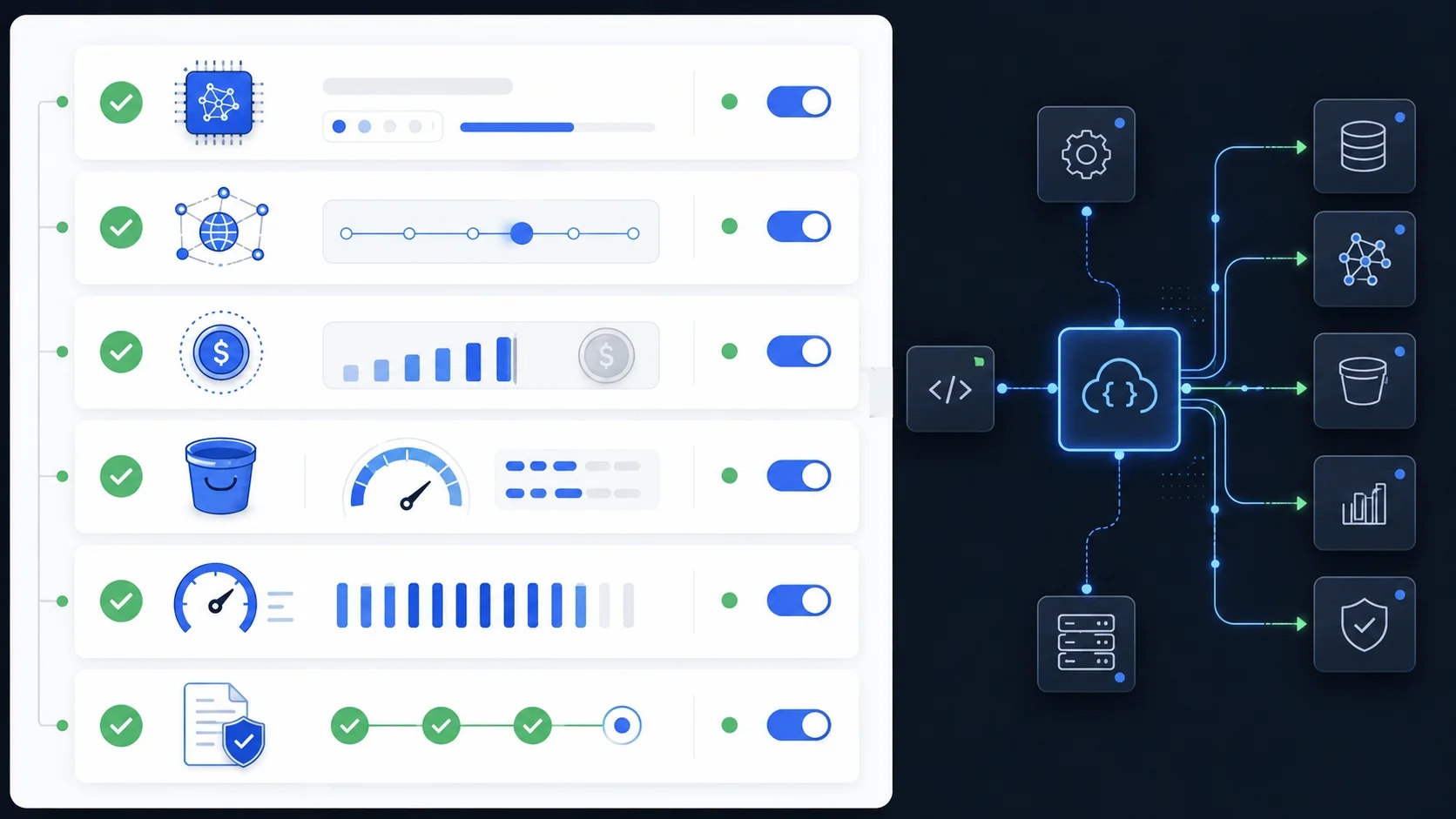
Gemini Omni API verification checklist for developers

This is the practical rule:

UI evidence can justify watching a model. Official API evidence is what justifies building on it.

Search controversy: why the results are confusing

Gemini Omni is a new term, so the search results are still unstable. That creates a few predictable problems.

Search controversyWhy it mattersSafer developer interpretation
"Gemini Omni is launched"A demo or UI string can be mistaken for general availabilityTreat it as reported until Google publishes a release note
"Gemini Omni API"Users want API access, but app access and API access are differentLook for official Gemini API or Vertex AI docs
"Gemini Omni model ID"Community posts may circulate internal stringsInternal app identifiers are not public API model IDs
"Gemini Omni pricing"Pricing is a high-intent query, so sites may publish thin pages earlyDo not trust pricing until Google or a verified route page publishes it
"Gemini Omni generator"Exact-match third-party pages may look like product pagesSeparate unofficial tools from Google-owned documentation

This is where EvoLink's stance is deliberately conservative. If the article cannot point to Google-owned evidence, it should label the claim as reported, unverified, or not yet documented.

Developer verification checklist

Before using Gemini Omni in a real product, verify at least these items:

  1. Model ID: Does Google publish a developer-facing model ID?
  2. Endpoint: Is it available through Gemini API, Vertex AI, Google AI Studio, or only the Gemini app?
  3. Input support: Does it accept text, image, video, audio, or reference assets?
  4. Output support: What duration, aspect ratio, resolution, audio, and editing outputs are documented?
  5. Pricing: Is billing per second, per video, per credit, or tiered by quality?
  6. Quota and rate limits: Can the route support production volume?
  7. Usage terms: Are commercial use and generated-output rights clear?
  8. Latency and reliability: Does the route behave predictably enough for customer-facing workflows?
  9. Fallback path: Can your app route to Veo, Kling, Seedance, Wan, or another model if Omni is unavailable?

If any of those are missing, the model may still be exciting, but it is not ready to be a core production dependency.

What to use while Gemini Omni API is not public

For teams that need video generation now, the safest Google baseline is Veo 3.1, because Google documents Veo 3.1 through official developer routes.

Veo 3.1 is not the only option in the broader video API market. Depending on your workflow, you may also evaluate:

  • Kling for standard text-to-video and image-to-video generation
  • Seedance for cinematic or human-video workflows
  • Wan for story-led video generation and fixed-output planning
  • other available video routes where model IDs, pricing, and API behavior are documented

The key is not to lock your product around one rumored model name. Put video generation behind an internal abstraction:

  • submit a job
  • poll or receive completion
  • fetch generated assets
  • record cost, latency, and failure reason
  • swap models without changing the user-facing workflow

That makes Gemini Omni an evaluation event later, not a rewrite.

If Google publishes Gemini Omni as a public API route, EvoLink should evaluate it on production criteria, not only demo quality.

Evaluation areaWhat matters
API availabilityIs there a stable public model route?
Pricing shapePer second, per video, credit-based, preview-only, or tiered
LatencyWhether output time fits customer workflows
QuotaWhether rate limits support batch or production usage
Editing abilityWhether remix, object swap, or chat-based editing are exposed through API
QualityPrompt adherence, identity consistency, audio, temporal coherence
ReliabilityFailure rate, retry behavior, and predictable outputs
TermsCommercial use and generated-output rules

This evaluation is what separates a useful developer guide from a hype article.

Google I/O 2026 watchlist

Google I/O 2026 is scheduled for May 19-20, 2026, with keynotes and livestreamed sessions. If Gemini Omni appears there, the developer-relevant signals to watch are:
  • a Google blog post naming Gemini Omni
  • a Gemini API model row
  • a Vertex AI model page
  • Google AI Studio visibility
  • pricing and billing language
  • quota or rate-limit language
  • supported input and output modalities
  • release stage: experimental, preview, paid preview, or generally available

An I/O keynote demo alone would be interesting. For developers, the real milestone is documentation.

When this page should become a tutorial

This article should stay a status page until Google publishes a real developer surface for Gemini Omni.

It should only be rewritten into a tutorial after at least one official source confirms:

  • a public model ID
  • a supported API endpoint
  • SDK or request examples
  • pricing
  • quota or rate-limit guidance
  • usage terms

Until then, a "how to use Gemini Omni API" article would be premature. The useful job of this page is to separate public evidence from search speculation.

Next step for teams building video features

If you need video generation in production today, compare available documented routes first. Keep your integration flexible, and treat Gemini Omni as a route to evaluate if Google turns it into a public API.

Compare Available Video Models on EvoLink

FAQ

Is Gemini Omni API available now?

Not as a documented public Gemini API model ID in the official sources reviewed for this article. As of May 12, 2026, Gemini Omni should be treated as a watch item.

Does Gemini Omni have a public model ID?

No public developer-facing model ID has been confirmed by Google. Community or app-internal strings should not be treated as public API model IDs.

Is Gemini Omni the same as Veo 3.1?

That is not confirmed. Gemini Omni could be a new model, a Gemini app product layer, or a Veo-backed experience. Until Google explains the relationship, developers should avoid hard claims.

Will Gemini Omni launch at Google I/O 2026?

It could, but that is still an inference. Google I/O 2026 runs May 19-20, 2026, so it is the obvious watch window, but there is no official Gemini Omni API announcement yet.

Can developers build with Gemini Omni today?

Not safely. Developers should wait for a public model ID, endpoint, pricing, quota, rate limits, usage terms, and API documentation.

What should developers use before Gemini Omni API is public?

Use documented video routes. For Google's video stack, Veo 3.1 is the clearer baseline today. Depending on workflow needs, teams can also compare Kling, Seedance, Wan, and other available video models.

Is Gemini Omni pricing available?

No official public Gemini Omni API pricing was found in the sources reviewed for this article. Do not plan budgets around unofficial pricing pages.

What will prove Gemini Omni is production-ready?

A production-ready signal would include Google-owned documentation, a public model ID, pricing, quota, supported modalities, usage terms, and enough reliability data for real workloads.

Sources

Ready to Reduce Your AI Costs by 89%?

Start using EvoLink today and experience the power of intelligent API routing.